Not bad stuff this, from Henri de Lubac, everybody's favourite mid-century French Catholic theologian:
The Bible makes an extraordinary impression on the historian: the conbtrast between the humble beginnings of Israel and the potency of the seed, or rather the explosives, which it contains; its concrete shape shrouded from the outset in the loftiest beliefs; then its stately expansion its confident though hidden progress to a boundless and unpredictable end: nowhere else can be found anything in the least like it. Nothing resembles the stupendous incoherence of its prophetic literature; only a transfiguration of the whole, glimpsed in sudden flashes, can prevent overwhelming and endless contradictions. The historical character of the religion of Israel can be understood in all its originality only through its consummation in the religion of Christ. We should never forget that the explanation of Judaims is not to be found within itself. Catholicism, p. 164
I think he is right about the OT... its coherence (without Christ) is rather slippery. Deuteronomy is a wonderful case in point: a law book that points to its own redundancy and to the inevitability of its own insufficiency... amazing.
Showing posts with label Catholicism. Show all posts
Showing posts with label Catholicism. Show all posts
Saturday, February 02, 2008


Tuesday, October 16, 2007
Catholic Social teaching: a failure?
Gerard Henderson makes this claim in the Sydney Morning Herald:
'The unfashionable fact is that nations which have paid heed to Catholic social teaching have had poor economic outcomes. Ireland and Italy come to mind. Ireland recovered from high unemployment only after it embraced economic reform. '
Justifiable? The rest of the article is very interesting too, on the right of Church leaders to make public comment and the inconsistency of politicians and journalists in supporting them when they do so.
'The unfashionable fact is that nations which have paid heed to Catholic social teaching have had poor economic outcomes. Ireland and Italy come to mind. Ireland recovered from high unemployment only after it embraced economic reform. '
Justifiable? The rest of the article is very interesting too, on the right of Church leaders to make public comment and the inconsistency of politicians and journalists in supporting them when they do so.
Monday, June 11, 2007
Rahner vs Balthasar: martyrdom in contemporary Roman Catholicism II

Balthasar’s small work specifically on martyrdom relates to grander themes in his entire oeuvre; however, it particularly reflects Balthasar’s dismay at Rahner’s famous ‘anonymous Christian’ idea. Balthasar points out that is precisely at the point of martyrdom that this notion becomes untenable. Rahner stands accused of switching the moment of decision for the Christian from the encounter with the crucified Christ which demands our faith to the moment when one is – as any human person is – met by the need of the neighbour for love. That is not to say that Balthasar is opposed to the works of love that might result in a bloody martyrdom: only that this is not the point of decision for the Christian, the Ernstfall which generates the life that follows. That belongs only to the cross and resurrection of Christ. It is only from these events that the Christian life truly springs:
What then should a Christian be? He should be one who offers up his life in the service of his fellow man because he owes his life to Christ crucified.
While Rahner and others might be right in urging a broadening of the concept of martyrdom, they do not sufficiently ties it back in the events that gave it birth. Witness-bearing, for Balthasar, may take a variety of forms, granted. What Balthasar wants to re-assert is that martyrdom is an ‘act’ of faith – and that faith as faith in the God of Jesus Christ:
Man becomes aware of the nature of his particular mission in life when he calmly puts his trust in God. But whatever particular Christian state the believer may live in, he lives as one who has died and been resurrected, because his while existence is an attempt to make a loving and thankful response to God ‘by faith in the Son of God, who loved me and gave himself for me’ (Gal 2:20).
Balthasar’s suggestion helps not to foreclose the possible range of consequences of a life of authentic Christian witness (which is the concern of Rahner and Boff); but also ties it inextricably to the work of Christ in the believer, such that it could never be said that martyrdom anything other than a divine act.
Friday, May 04, 2007
Peter Jensen: Protestant, Reformed, Evangelical
A series recently given by the Archbishop of Sydney to a lay audience:
Why_I_am_Protestant
Why_I_am_Reformed
Why_I_am_Evangelical
Why_I_am_Protestant
Why_I_am_Reformed
Why_I_am_Evangelical
Wednesday, March 07, 2007
Rahner on sacraments
Rahner posits the Chuch as the basic sacrament. The other (seven) sacraments occur when the church 'addresses itself to and involves itself totally in existentielly [sic] decisive sitiations in human life'.
He says that, if institution by Jesus is a criteria, then NONE of the sacraments can be traced back to Jesus for certain (following modern Biblical scholarship). Instead, the sacraments flow from the institution of the church by Jesus. The sevenfold sacraments are an interpretation by the church of its sacramental existence.
Man must respond in faith, hope and love: the sacraments are not 'magical', though they have been misunderstood as such.
He goes on to adopt an almost Calvinist description - in all the sacraments is 'the efficacious word of God.' They are a 'tangible word of God'. But also: 'It is precisely in a sacramental word, where the chuch addresses God's word to an individual in his quite concrete salvific situation, that the individual precisely as individual is addressed by the word of God in a way which is not found in the general word of preaching even in a really existentiell sermon...'
He says that, if institution by Jesus is a criteria, then NONE of the sacraments can be traced back to Jesus for certain (following modern Biblical scholarship). Instead, the sacraments flow from the institution of the church by Jesus. The sevenfold sacraments are an interpretation by the church of its sacramental existence.
Man must respond in faith, hope and love: the sacraments are not 'magical', though they have been misunderstood as such.
He goes on to adopt an almost Calvinist description - in all the sacraments is 'the efficacious word of God.' They are a 'tangible word of God'. But also: 'It is precisely in a sacramental word, where the chuch addresses God's word to an individual in his quite concrete salvific situation, that the individual precisely as individual is addressed by the word of God in a way which is not found in the general word of preaching even in a really existentiell sermon...'
Monday, February 26, 2007
Luther on the wheat and the tares
My recent fixation on ecclesiology, authority and Protestantism comes about partly because of the post-liberal and Radical Orthodox turns to ecclesiology. Time for some words from Luther to add to my Calvin posts!
Luther was able to point to the corruption of the papacy as a counter-testimony to its own assertion of its holiness. It was a proud and not a humble curia. It failed to see the church as a repenting church, as the listening as well as the preaching church, as the waiting as well as the declaring church. We must quickly add of course that the church of Clement VII was not the only compromised ecclesia in history. Luther’s sermon on the parable of the wheat and the tares (Mt 13:24-30) is his riposte: the visible church on earth is not the eschatologically purified church; rather there it is taught by even Christ himself that true and false will be side by side in it:
…we are not to think that only true Christians and the pure doctrine of God are to dwell upon the earth; but that there must be also false Christians and heretics in order that the true Christians may be approved.
Ecclesiastical triumphalism ought always to be curtailed by the impurity of the visible church; and by recognition that the eschatological identity of the church is as yet still greatly concealed. Must the church then ignore untruth? Luther preaches strongly against the use of judicial violence against false teachers and heretics. The only right means by which the church may be cleansed is by the power of the Word:
We have to do here with God's Word alone; for in this matter he who errs today may find the truth tomorrow. Who knows when the Word of God may touch his heart? But if he be burned at the stake, or otherwise destroyed, it is thereby assured that he can never find the truth; and thus the Word of God is snatched from him, and he must be lost, who otherwise might have been saved.
It is not a matter of restraint, but of conviction: the possibility of the turning of the heretic under the power of the Word of God is always maintained, in contrast to the rather final method of the Inquisitor.
Luther was able to point to the corruption of the papacy as a counter-testimony to its own assertion of its holiness. It was a proud and not a humble curia. It failed to see the church as a repenting church, as the listening as well as the preaching church, as the waiting as well as the declaring church. We must quickly add of course that the church of Clement VII was not the only compromised ecclesia in history. Luther’s sermon on the parable of the wheat and the tares (Mt 13:24-30) is his riposte: the visible church on earth is not the eschatologically purified church; rather there it is taught by even Christ himself that true and false will be side by side in it:
…we are not to think that only true Christians and the pure doctrine of God are to dwell upon the earth; but that there must be also false Christians and heretics in order that the true Christians may be approved.
Ecclesiastical triumphalism ought always to be curtailed by the impurity of the visible church; and by recognition that the eschatological identity of the church is as yet still greatly concealed. Must the church then ignore untruth? Luther preaches strongly against the use of judicial violence against false teachers and heretics. The only right means by which the church may be cleansed is by the power of the Word:
We have to do here with God's Word alone; for in this matter he who errs today may find the truth tomorrow. Who knows when the Word of God may touch his heart? But if he be burned at the stake, or otherwise destroyed, it is thereby assured that he can never find the truth; and thus the Word of God is snatched from him, and he must be lost, who otherwise might have been saved.
It is not a matter of restraint, but of conviction: the possibility of the turning of the heretic under the power of the Word of God is always maintained, in contrast to the rather final method of the Inquisitor.
Sunday, February 25, 2007
Reporting on the church
An interesting article on media reporting of church matters - from a Roman Catholic perspective - is here. It responds in the first instance to the woeful reporting of the alleged union between Anglican and RC churches last week, which was based on... what exactly?
Thursday, February 22, 2007
The scattered gathering
Augustine in The City of God writes:
Scripture tells us that Cain founded a city, whereas Abel, as a pilgrim, did not found one. For the City of the saints is up above, although it produces citizens here below, and in their persons the City is on pilgrimage until the time of its kingdom comes. At the time it will assemble all those citizens as they rise again in their bodies; and they will be given the promised kingdom, where with their Prince, ‘the king of ages’, they will reign, world without end. (XV.1)
The church is an eschatologically gathered polis, in other words. In the book of Acts, the scattering of the disciples - because of persecution - is the impetus for mission. It parallels the scattering of the peoples in the early chapters of Genesis. In this way, the church ought not to exalt in its earthly structures as if these are in some way more than replicas or shadows of the eschatological reality in which it really has its existence. The church ought not to seek to foreshorten the eschatological gap between present experience and the promise that lies ahead. It ought not to proclaim the end of its pilgrimage, or that in coming to one place on the globe it has finally arrived at its destination, its promised land, its Jerusalem. It ought not to imagine that whatever unity it can construct here on earth is the definitive eschatological unity that will one day be realised. In fact, the organisational unity of churches may be a hinderance to the real unity and fellowship of Christians.
Admittedly, Augustine may not have taken this thought in this direction. For him, the impressive historical reality and success of the church was a very strong apologetic for its message...
Scripture tells us that Cain founded a city, whereas Abel, as a pilgrim, did not found one. For the City of the saints is up above, although it produces citizens here below, and in their persons the City is on pilgrimage until the time of its kingdom comes. At the time it will assemble all those citizens as they rise again in their bodies; and they will be given the promised kingdom, where with their Prince, ‘the king of ages’, they will reign, world without end. (XV.1)
The church is an eschatologically gathered polis, in other words. In the book of Acts, the scattering of the disciples - because of persecution - is the impetus for mission. It parallels the scattering of the peoples in the early chapters of Genesis. In this way, the church ought not to exalt in its earthly structures as if these are in some way more than replicas or shadows of the eschatological reality in which it really has its existence. The church ought not to seek to foreshorten the eschatological gap between present experience and the promise that lies ahead. It ought not to proclaim the end of its pilgrimage, or that in coming to one place on the globe it has finally arrived at its destination, its promised land, its Jerusalem. It ought not to imagine that whatever unity it can construct here on earth is the definitive eschatological unity that will one day be realised. In fact, the organisational unity of churches may be a hinderance to the real unity and fellowship of Christians.
Admittedly, Augustine may not have taken this thought in this direction. For him, the impressive historical reality and success of the church was a very strong apologetic for its message...
Union between Canterbury and Rome?
This week a rather premature report came out regarding the possibility of union between Anglicans and Rome.
My dad (Archbishop of Sydney) had some interesting things to say about it here . I thought he was remarkably conciliatory for the kind of Protestant he is!
What would it take? Well, I think organisational unity is a distraction and at least in human terms unachieveable even if it was desireable. Far better to work at the local level... Bible study anyone? I think a real unity between believers is a possibility.
Part of the problem is the theology of the papacy. Not the papacy itself per se, but the untenable theology of the Petrine office. If the Popes actually exercised a remarkable biblical and spiritual leadership (as, I have to admit JP II did in part) then the authority of the papacy would become an attractive possibility. But I wouldn't want to be under papal authority in the way that it seems to be construed in Catholic formularies since Vatican 1.
My dad (Archbishop of Sydney) had some interesting things to say about it here . I thought he was remarkably conciliatory for the kind of Protestant he is!
What would it take? Well, I think organisational unity is a distraction and at least in human terms unachieveable even if it was desireable. Far better to work at the local level... Bible study anyone? I think a real unity between believers is a possibility.
Part of the problem is the theology of the papacy. Not the papacy itself per se, but the untenable theology of the Petrine office. If the Popes actually exercised a remarkable biblical and spiritual leadership (as, I have to admit JP II did in part) then the authority of the papacy would become an attractive possibility. But I wouldn't want to be under papal authority in the way that it seems to be construed in Catholic formularies since Vatican 1.
Wednesday, February 21, 2007
Rahner on doctrinal boundaries
In the light of the Anglican Communion's drawing of a line in the doctrinal/ethical sand - well, kind of - I was interested to read this from our old friend Karl Rahner:
...a church cannot be a church if it would never have the courage to declare something anathema, if it could tolerate absolutely everything and anything as an equally justified opinion among Christians. (p. 382 Foundations of Christian Faith)
However: has there ever been such a church? Even the ultra-liberal revisionists have anathemas. They are forced to show where and who they would definitely exclude in order to meet precisely this criteria.
Immediately we have to ask about specifics. What are the core and basic truths? What are the negotiables? Rahner won't admit, as he goes on, that the dogmatic propositions of the faith are so easily detatchable from one another. They have a structure, which may be dislocated if even a small part is changed.
...a church cannot be a church if it would never have the courage to declare something anathema, if it could tolerate absolutely everything and anything as an equally justified opinion among Christians. (p. 382 Foundations of Christian Faith)
However: has there ever been such a church? Even the ultra-liberal revisionists have anathemas. They are forced to show where and who they would definitely exclude in order to meet precisely this criteria.
Immediately we have to ask about specifics. What are the core and basic truths? What are the negotiables? Rahner won't admit, as he goes on, that the dogmatic propositions of the faith are so easily detatchable from one another. They have a structure, which may be dislocated if even a small part is changed.
Authority again
I have been invited by a Catholic priest and theologian acquaintance of mine to discuss the ARCIC document The Gift of Authority. The document says:
The meaning of the revealed Gospel of God is fully understood only within the Church. God’s revelation has been entrusted to a community. The Church cannot properly be described as an aggregate of individual believers, nor can its faith be considered the sum of the beliefs held by individuals. Believers are together the people of faith because they are incorporated by baptism into a community which receives the canonical Scriptures as the authentic Word of God; they receive faith within this community. The faith of the community precedes the faith of the individual. So, though one person’s journey of faith may begin with individual reading of Scripture, it cannot remain there. Individualistic interpretation of the Scriptures is not attuned to the reading of the text within the life of the Church and is incompatible with the nature of the authority of the revealed Word of God (cf. 2 Pet 1.20-21). Word of God and Church of God cannot be put asunder.
Can we assent to this really and maintain a Reformation understanding of the authority of scripture? It sounds to me as if this is paving the way for the authority of the Church to interpret scripture ...
The meaning of the revealed Gospel of God is fully understood only within the Church. God’s revelation has been entrusted to a community. The Church cannot properly be described as an aggregate of individual believers, nor can its faith be considered the sum of the beliefs held by individuals. Believers are together the people of faith because they are incorporated by baptism into a community which receives the canonical Scriptures as the authentic Word of God; they receive faith within this community. The faith of the community precedes the faith of the individual. So, though one person’s journey of faith may begin with individual reading of Scripture, it cannot remain there. Individualistic interpretation of the Scriptures is not attuned to the reading of the text within the life of the Church and is incompatible with the nature of the authority of the revealed Word of God (cf. 2 Pet 1.20-21). Word of God and Church of God cannot be put asunder.
Can we assent to this really and maintain a Reformation understanding of the authority of scripture? It sounds to me as if this is paving the way for the authority of the Church to interpret scripture ...
Tuesday, February 20, 2007
'Within Tradition, the Scriptures...'
Within Tradition the Scriptures occupy a unique and normative place and belong to what has been given once for all. As the written witness to God’s "Yes" they require the Church constantly to measure its teaching, preaching and action against them. "Since the Scriptures are the uniquely inspired witness to divine revelation, the Church’s expression of that revelation must be tested by its consonance with Scripture" (Authority in the Church: Elucidation, 2). Through the Scriptures God’s revelation is made present and transmitted in the life of the Church. The "Yes" of God is recognised in and through the "Amen" of the Church which receives the authentic revelation of God. By receiving certain texts as true witnesses to divine revelation, the Church identified its Holy Scriptures. It regards this corpus alone as the inspired Word of God written and, as such, uniquely authoritative.
(From 'The Gift of Authority' Anglican-Roman Catholc International Commission, 1999)
Am I happy with this? Are the scriptures 'within Tradition', or is that somehow not enough? I do appreciate the statement about the uniqueness and inspiration of the Scriptures...
Anglican/Roman Catholic Statement: 'The Gift of Authority'
I love this bit about 'cannot refrain from transmitting it to others (of course)', here interestingly framed in terms of the passing on of the tradition:
Tradition is a channel of the love of God, making it accessible in the Church and in the world today. Through it, from one generation to another, and from one place to another, humanity shares communion in the Holy Trinity. By the process of tradition, the Church ministers the grace of the Lord Jesus Christ and the koinonia of the Holy Spirit (cf. 2 Cor 13.14). Therefore Tradition is integral to the economy of grace, love and communion. For those whose ears have not heard and eyes have not seen, the moment of receiving the saving Gospel is an experience of enlightenment, forgiveness, healing, liberation. Those who participate in the communion of the Gospel cannot refrain from transmitting it to others, even if this means martyrdom. Tradition is both a treasure to be received by the people of God and a gift to be shared with all humanity.
Tradition is a channel of the love of God, making it accessible in the Church and in the world today. Through it, from one generation to another, and from one place to another, humanity shares communion in the Holy Trinity. By the process of tradition, the Church ministers the grace of the Lord Jesus Christ and the koinonia of the Holy Spirit (cf. 2 Cor 13.14). Therefore Tradition is integral to the economy of grace, love and communion. For those whose ears have not heard and eyes have not seen, the moment of receiving the saving Gospel is an experience of enlightenment, forgiveness, healing, liberation. Those who participate in the communion of the Gospel cannot refrain from transmitting it to others, even if this means martyrdom. Tradition is both a treasure to be received by the people of God and a gift to be shared with all humanity.
Friday, February 09, 2007
Les Murray's Collected Poems
[Yes, English readers: there are Australian poets who write about subjects other than sport...]
It's a body-prayer, a shower: you're
In touch all over, renewing, enfolded in a wing – (p.501)
I really think you should read some of Les Murray's poetry. Les Murray is arguably Australia's best regarded poet, both in Australia and internationally. The collecting of forty years of his work in a single volume shows just how impressive his achievement is. His unique accent – which he says is part of the soil up Bunyah way – and his extraordinary, prodigious gift of language combine in poetry that is at once chatty-colloquial and demanding. He doodles with words in the same way Shakespeare did. He writes with a mordant humour and a laughing sadness that is distinctively Australian and shows that a distinctively Australian poetry doesn't have to be of the bush-ballad variety.
I found at first, reading Murray, that his work was prickly, difficult and unyielding. What helped me was finding that a couple of common threads are wound into his work: the great Australian barbecue stoppers: politics and religion. Firstly, Murray has a fiercely independent vision of Australia and of the world. He sees himself articulating the languauge the common man against the elitism of the city-bound latte set. This slight paranoia is aimed at the urban media and academic castes who patronize the rural less-privileged – people like Murray himself.
…It's called Big Shame, my poison-brother fellow
says, this feeling abashed by proper people.
Before Racist and Beaut Authentic, we were Low…(p.480)
When Sydney and the Bush meet now
There is no common ground. (p.124)
He speaks the accent of the Aussie outsider, the "battler" of popular legend. For example, he rails against the Australian tendency to savage well-known females like Hanson, Lawrence, Chamberlain and Kernot:
In Australia, a lone woman
Is being crucified by the Press
At any given moment
With no unedited right
of reply, she is cast out
into Aboriginal space. (p.466)
This political no-woman's land is shared by the dirt farmers and the aborigines, adrift from privilege and the language of "rights". One of Murray's pet hates is the way in which (white) academics and bureaucrats have turned the language of Aboriginal rights against country people, as if their rural cousins are to blame for their bad conscience. The perhaps surprising affinity between rural whites and their aboriginal neighbours he captures in an early poem entitled "Thinking About Aboriginal Land Rights, I Visit the Farm I Will Not Inherit":
Murray is a deeply religious poet and writes deeply religious poetry, in defiance of the secularism of the intelligentsia: "Snobs mind us off religion/ nowadays, if they can" (p.432).
Leaving behind the Free Kirk Presbyterianism of his upbringing, Murray found in Catholicism the religious counterpart to his calling as a poet:
Prose is protestant-agnostic,
Story, discussion, significance,
but poetry is Catholic;
poetry is presence. (p.341)
He writes in his collection of prose The Quality of Sprawl that "in the Free Church service of my childhood, with its emphasis on the sermon, there wasn't enough receptive silence; there was no sense of ceremony deepened to the point where human activity briefly fell away and God was present." It is this "presence" that Murray tries to capture in his poetry. After all, as he writes in "Poetry and Religion" (p.265), "Religions are poems." What he means is that true religion is a "dreaming", an act of the imagination. Just as you can't pray a lie, so "you can't poe one either." God is "the poetry caught in any religion, caught, not imprisoned."
It is this "presence" which fills Murray's luminescent nature poetry. The series of animal poems, entitled sure enough "Presence: Translations from the Natural World" (p.355-378), serve to illustrate. "Bat's Ultrasound" ends with this remarkable coda:
Ah, eyrie-ire, aero hour, eh?
O'er our ur-area (our era aye
Ere your raw row) we air our array,
Err, yaw, row wry – aura our orrery,
Our eerie u our ray, our arrow.
A rare ear, our aery Yahweh. (p.355)
Murray's eye captures the glint of God in the creation in a way that Gerard Manley Hopkins did a century ago; and as with Hopkins, the beauty and playfulness of his language mirrors what he sees in nature. It is a sublime tuning of the gift of language to the divine key. Murray's ear is also "rare". I am reminded in these poems of the playful and yet awe-some animal poems of the Bible, whose point is to draw glory to the creator from contemplation of the creatures: Job 38-39 and Psalm 104.
Murray has much to say in prose and poetry about the "religion" of Australia. He recognizes that the spiritual energy of Australians is more and more absorbed by the quest for "national and communal identity". The Anzac myth is not as sacred as we think:
In the dream, Clarrie Dunn
Sits naked with many thousands
In the muddy trench. He is saying
The true god gives his flesh and blood.
Idols demand yours off you. (p.554)
Australia is in a drift away from traditional Christianity, but has not found an adequate replacement; and so we have become a nation of unsatisfied spiritual longings which are only met by the shallowest of new-age mumblings. He urges Australian Christians not to "be tempted to see ourselves as a team that has to win for God; He is not helpless – and anyway His idea of a win is the Cross, which may be the place where the truly irresoluble contradictions, by which out life in the world is torn but also perhaps powered, meet and get the only resolution they can obtain, that is a living continuous one which we've agreed to take part in after all" (The Quality of Sprawl, p.47).
There is of course a great deal more to his poetry than politics and religion I would hasten to add. The Collected Poems contains poems that will never leave me for their wit, their beauty and their sadness. Read his poetry alongside the excellent biography by Sydney Anglican Peter Alexander.
It's a body-prayer, a shower: you're
In touch all over, renewing, enfolded in a wing – (p.501)
I really think you should read some of Les Murray's poetry. Les Murray is arguably Australia's best regarded poet, both in Australia and internationally. The collecting of forty years of his work in a single volume shows just how impressive his achievement is. His unique accent – which he says is part of the soil up Bunyah way – and his extraordinary, prodigious gift of language combine in poetry that is at once chatty-colloquial and demanding. He doodles with words in the same way Shakespeare did. He writes with a mordant humour and a laughing sadness that is distinctively Australian and shows that a distinctively Australian poetry doesn't have to be of the bush-ballad variety.
I found at first, reading Murray, that his work was prickly, difficult and unyielding. What helped me was finding that a couple of common threads are wound into his work: the great Australian barbecue stoppers: politics and religion. Firstly, Murray has a fiercely independent vision of Australia and of the world. He sees himself articulating the languauge the common man against the elitism of the city-bound latte set. This slight paranoia is aimed at the urban media and academic castes who patronize the rural less-privileged – people like Murray himself.
…It's called Big Shame, my poison-brother fellow
says, this feeling abashed by proper people.
Before Racist and Beaut Authentic, we were Low…(p.480)
When Sydney and the Bush meet now
There is no common ground. (p.124)
He speaks the accent of the Aussie outsider, the "battler" of popular legend. For example, he rails against the Australian tendency to savage well-known females like Hanson, Lawrence, Chamberlain and Kernot:
In Australia, a lone woman
Is being crucified by the Press
At any given moment
With no unedited right
of reply, she is cast out
into Aboriginal space. (p.466)
This political no-woman's land is shared by the dirt farmers and the aborigines, adrift from privilege and the language of "rights". One of Murray's pet hates is the way in which (white) academics and bureaucrats have turned the language of Aboriginal rights against country people, as if their rural cousins are to blame for their bad conscience. The perhaps surprising affinity between rural whites and their aboriginal neighbours he captures in an early poem entitled "Thinking About Aboriginal Land Rights, I Visit the Farm I Will Not Inherit":
Murray is a deeply religious poet and writes deeply religious poetry, in defiance of the secularism of the intelligentsia: "Snobs mind us off religion/ nowadays, if they can" (p.432).
Leaving behind the Free Kirk Presbyterianism of his upbringing, Murray found in Catholicism the religious counterpart to his calling as a poet:
Prose is protestant-agnostic,
Story, discussion, significance,
but poetry is Catholic;
poetry is presence. (p.341)
He writes in his collection of prose The Quality of Sprawl that "in the Free Church service of my childhood, with its emphasis on the sermon, there wasn't enough receptive silence; there was no sense of ceremony deepened to the point where human activity briefly fell away and God was present." It is this "presence" that Murray tries to capture in his poetry. After all, as he writes in "Poetry and Religion" (p.265), "Religions are poems." What he means is that true religion is a "dreaming", an act of the imagination. Just as you can't pray a lie, so "you can't poe one either." God is "the poetry caught in any religion, caught, not imprisoned."
It is this "presence" which fills Murray's luminescent nature poetry. The series of animal poems, entitled sure enough "Presence: Translations from the Natural World" (p.355-378), serve to illustrate. "Bat's Ultrasound" ends with this remarkable coda:
Ah, eyrie-ire, aero hour, eh?
O'er our ur-area (our era aye
Ere your raw row) we air our array,
Err, yaw, row wry – aura our orrery,
Our eerie u our ray, our arrow.
A rare ear, our aery Yahweh. (p.355)
Murray's eye captures the glint of God in the creation in a way that Gerard Manley Hopkins did a century ago; and as with Hopkins, the beauty and playfulness of his language mirrors what he sees in nature. It is a sublime tuning of the gift of language to the divine key. Murray's ear is also "rare". I am reminded in these poems of the playful and yet awe-some animal poems of the Bible, whose point is to draw glory to the creator from contemplation of the creatures: Job 38-39 and Psalm 104.
Murray has much to say in prose and poetry about the "religion" of Australia. He recognizes that the spiritual energy of Australians is more and more absorbed by the quest for "national and communal identity". The Anzac myth is not as sacred as we think:
In the dream, Clarrie Dunn
Sits naked with many thousands
In the muddy trench. He is saying
The true god gives his flesh and blood.
Idols demand yours off you. (p.554)
Australia is in a drift away from traditional Christianity, but has not found an adequate replacement; and so we have become a nation of unsatisfied spiritual longings which are only met by the shallowest of new-age mumblings. He urges Australian Christians not to "be tempted to see ourselves as a team that has to win for God; He is not helpless – and anyway His idea of a win is the Cross, which may be the place where the truly irresoluble contradictions, by which out life in the world is torn but also perhaps powered, meet and get the only resolution they can obtain, that is a living continuous one which we've agreed to take part in after all" (The Quality of Sprawl, p.47).
There is of course a great deal more to his poetry than politics and religion I would hasten to add. The Collected Poems contains poems that will never leave me for their wit, their beauty and their sadness. Read his poetry alongside the excellent biography by Sydney Anglican Peter Alexander.
Thursday, February 08, 2007
Rahner on Sola Fide
Rahner makes a virtuoso attempt to outline a Catholic ecclesiology that has a place for the Reformation as a movement within Catholicism. Interestingly, he goes to the Reformation solas and tries to show how, in fact, these were and are true Catholic teachings.
About Sola Fide he says:
'...the act of response to God's grace which alone gives salvation is not a work, but rather, in Pauline terms, it is faith. The Catholic doctrine is that this faith is not merely a dogmatic theory, that this faith must be based interiorly on a hope in the pure grace of God, and that this faith must be interiorly illuminated and fulfilled by what Holy Scripture calls love, calls justifying and sanctifying love. Basically an Evangelical Christian cannot raise any objections against this...' p. 361
Well, wait a minute! Perhaps not an objection, more a quibble: I do think he has clarified helpfully that faith does not equal 'some knowledge believed' (which causes such great confusion). I just don't understand what love is doing there: what can he possibly mean by this love that justifies/sanctifies? What texts is he refering to? Isn't this just a way of sneaking works back in there (in a semi-Pelagian move)?
Of course the Catholic church may decide it agreed with the Reformation all along on this, but unless it becomes the 'article on which the church stands or falls' (Luther), there is still a large difference.
About Sola Fide he says:
'...the act of response to God's grace which alone gives salvation is not a work, but rather, in Pauline terms, it is faith. The Catholic doctrine is that this faith is not merely a dogmatic theory, that this faith must be based interiorly on a hope in the pure grace of God, and that this faith must be interiorly illuminated and fulfilled by what Holy Scripture calls love, calls justifying and sanctifying love. Basically an Evangelical Christian cannot raise any objections against this...' p. 361
Well, wait a minute! Perhaps not an objection, more a quibble: I do think he has clarified helpfully that faith does not equal 'some knowledge believed' (which causes such great confusion). I just don't understand what love is doing there: what can he possibly mean by this love that justifies/sanctifies? What texts is he refering to? Isn't this just a way of sneaking works back in there (in a semi-Pelagian move)?
Of course the Catholic church may decide it agreed with the Reformation all along on this, but unless it becomes the 'article on which the church stands or falls' (Luther), there is still a large difference.
Wednesday, February 07, 2007
Rahner on Church...
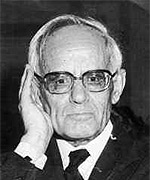 We are looking at Rahner as the counterpoint to Calvin on the church. Here's what he has to say:
If, then, there are very many Christians today who basically regard the different ecclesial communities as equally legitimate churches, this relativistic opinion in ecclesiology presupposes either that the church of Jesus Christ as he willed it does not exist at all, or that in spite of divisions among Christians it exists to such an extent that it does not really have to be brought about. Basically, then, all ecumenical efforts and endeavours for a single church would be superfluous to begin with, or ecumenical endeavours only strive for an additional unity which ultimatley would have nothing to do with the essential unity of the church which already exists. Foundations of Christian Faith, p. 353-4
To which I say, 'well, yes...!' If by unity, he means a kind of organisational or heirarchical unity, which is no unity at all unless there is a single mindedness of course...
Subscribe to:
Posts (Atom)