In the opening pages of The Secular Age Charles Taylor outlines something rather interesting about the contemporary shift to a culture of secularity - meaning specifically, an age in which religion has become very much an option.
It goes something like this:
Every society and every person lives with some conception of what human flourishing constitutes, or what a fulfilled life resembles. In religions, the best human living includes aiming at a final goal somewhat beyond ordinary human flourishing. In Christianity, loving and worshipping God is the ultimate end; though of course it is true that God wills human flourishing in Christianity. But, writes Taylor: the believer...is called upon to make a profound inner break with the goals of floursihing in their own case; they are called on, that is, to detach themselves from their own flourishing, to the point of..renunciation of human fulfillment to serve God...
This isn't just masochism (as it might be with the Stoics): for Christians, renunciation is only meaningful if the thing renounced (ie life itself) is worth having in the first place:
God wills ordinary human flourishing, and a great part of what is reported in the Gospels consists in Christ making this possible for the people whose afflictions he heals. The call to renounce doesn't negate the value of flourishing; it is rather a call to centre everything on God, even if it be at the cost of forgoing this unsubstitutable good...
So: flourishing is good, but not the ultimate goal of human life.
What Taylor is describing in his book is a humanism in which there are no final goals beyond human flourishing, 'nor allegiance to anything else beyond this flourishing'. Never before in human history has this 'self-sufficing humanism' become a widely available option. 'A secular age is one in which the eclipse of all goals beyond human flourishing becomes conceivable; or better, it falls within the range of an imaginable life for masses of people'.
This is an entirely new context: there is now no naive acknowledgement of the transcendent, or of goals that go beyond ordinary human flourishing. 'Naivete' says Taylor 'is now unavailable to anyone, believer, or unbeliever alike.'
The implications of what Taylor is saying for Christian missions are enormous. We live in a completely new context of believing/unbelieving. Arguably, in Australia this has been a development only since the 1960s! The is no precedent (if Taylor is right) for missions to a society in which, en masse, people do not see belief in some transcedent other as a necessity. Believing is entirely contigent for Mr and Mrs Average living in their cul-de-sac in the suburbs. The temptation of course will be to cast Christianity entirely in terms of human flourishing - and there are left and right-wing versions of this...
Showing posts with label authenticity. Show all posts
Showing posts with label authenticity. Show all posts
Friday, April 17, 2009


Thursday, April 03, 2008
A Taylorean Glossary for Theologians - V
Horizons of Significance For Taylor, our selfhood is necessarily dialogical. We are selves with reference to 'horizons of significance', as he explains in his The Ethics of Authenticity.
Personal authenticity can’t be defended in ways that deny horizons of significance. In fact (and here Taylor is especially suggestive of the theological) even the sense that choice is the root of my personal significance is grounded on the understanding that ‘independent of my will there is something noble, courageous, and hence significant in giving shape to my own life’.(p. 39)
Horizons of significance come to us from outside of ourselves: they are given. There is already, anterior to the choices of the individual, a picture (or pictures) of what human beings are like, or ought to be. Even positing self-choice in itself as a moral ideal requires that there are choices that themselves are significant. As Taylor says, ‘[I] can define my identity only against the background of things that matter’ (p. 40); and if I am to bracket out from consideration history, nature, society and everything except for that which I find in myself, I am surely not choosing for myself anything other than the trivial. ‘Authenticity is not the enemy of demands that emanate from beyond the self; it supposes such demands’ (p. 41). Some reference to the self-transcending – whether God, nature, nation, ideology or whatever else – is necessary for authentic selfhood. Choice itself cannot be basic.
Fair enough: but is it a distraction to see this as pre-theological in some way? Can we just substitute in any 'horizon', as if there were ready made alternatives that we could just attatch?
Thursday, June 28, 2007
An Existential Question

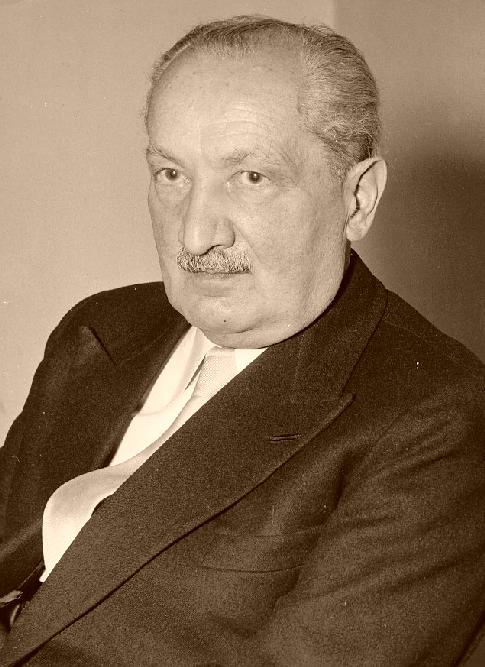 Can I really write a thesis on martyrdom and authentic selfhood and not mention either Heidegger or Kierkegaard?
Friday, June 02, 2006
On Longing...
Nostalgia is a form of longing: specifically a romantic longing for the past. In her critical account of the ‘social disease’ of nostalgia in postmodernity, Susan Stewart defines it as ‘the repetition that mourns the inauthenticity of all repetition’. That is to say nostalgia makes the idealized and exaggerated past into the site of immediacy, presence and authenticity. Stewart further describes nostalgia as a narrative form about the past which only heightens the sense of lack felt in the present. It focuses on what has been lost rather than what it is possible to gain. The problem is that nostalgia itself recognizes the very impossibility of a return to the past: hence the irony in Stewart’s definition which captures so well the temptation facing Thomas. As she puts it, nostalgia is ‘the desire for desire; it is a desire that folds back on itself in a deliberate (and for Stewart, self-destructive) sadness which is ultimately inauthentic.
Ultimately her accusation is that nostalgia makes an idol out of the past. Is this a bit harsh? I happen to like 80s parties and Happy Days... after all? Isn't innocent fun? Well not for Stewart: she sees this stuff as symptomatic of an ideological conservatism, a desire for comfort that blinds us to the urgent present. It is a malignant cultural tendency, for her.
There has to be place for a proper traditionalism that doesn't treat the past like nostalgia does. It would be easy to slip into a kind of amnesia without some way of bringing the past present. But there certainly is a fawning traditionalism: the kind that builds neo-gothic cathedrals in the Antipodes!
Of course, this is all reminiscent of the great theologian of longing: Augustine. Stewarts definition of nostalgia as ‘desire for desire’ meets its counterpart in Augustine’s confession of being ‘in love with love’ in his Confessions. In the latter part of the Confessions, Augustine writes powerfully about memory (revealing his Platonic influence). However the best memory - and the supreme and right object of the heart's longing - is the memory of the beatific vision which lies in the future!
Susan Stewart, On Longing: Narratives of the Miniature, the Gigantic, the Souvenir, the Collection (Durham: Duke University Press, 1993), p. 23
Thursday, March 30, 2006
giddens and self-identity
I have been reading a terrific book called "Modernity and Self-identity" by Anthony Giddens.
He is very good at describing how we cast ourselves as selves in the contemporary world. Modernity's fundamental attitude towards knowledge is radical scepticism and doubt...which means that when it comes to 'making the self' we have to do it alone..'reflexively'. But we do it amidst a bewildering array of options and possibilities. That is a fact of post-traditional life. No wonder we are anxious...
Trust is basic to modernity, because we have given over knowledge in so many areas to experts. We need to trust them in order to operate: that the train driver knows what he is doing, that the vitamins we take won't give us cancer, that omega 3 oils are good for us, etc. Which is why when expert knowledge is proven mistaken or corrupt we are thrown into such anxiety... it is also true that some of this expert knowledge is getting us into trouble, because we can't integrate it into a whole. So, we may take a pill that solves one problem, only to find it gives us another.
Modernity, says Giddens, is a 'risk culture'. He means that the concept of risk is fundamental to the way we organise the social world. We assess the future by means of calculating risk (rather than entrusting ourselves to prayer, for example). But at the same time, modernity has introduced new, global risks... apocalyptic risks, you might say. Paradoxically, moderns still talk of fate and destiny...
So: 'self-identity becomes a reflexively organised endeavour. The reflexive project of the self...consists in the sustaining of coherent, yet continuously revised, biographical narratives '. We see oursleves as 'writing'/'performing' on life's stage. This is where 'lifestyle' comes in: it is our choice of life-story as far as we have a choice. It is also interesting that the intimate relationship - the 'pure relationship', not formed from anything other than choice - has become so crucial to the way we project our lives.
This affects the body as well... the body as an outward form of our self is subject to our construction and control, or at least our attempts to do so. He notes along with this that our culture has a powerful sense of shame attached to bodies especially, and has largely lost our sense of guilt.
Giddens also notes that the reflexive project of the self generates programmes of actualisation and mastery, though these lack moral meaning.... 'authenticity becomes both a pre-eminent value and a framework for self-actualisation, but represents a morally stunted process' (p. 9).
Wow: there is so much dense thought here and so much of relevance for my project and for Christian thinkers generally. I think martyrs are interesting here because of the way in which they incorporate death into a life-narrative: and also because they have a specific attitude to the future which supercedes calculation of risk...
(NB: I will be away in Cornwall for two weeks: blessed Passiontide and Easter to everyone).
Tuesday, November 22, 2005
Bonhoeffer and "authentic" humanity
Well it's about time I posted again. Sorry to anyone who has been checking this site to see any updates...
In his Ethics, Bonhoeffer spoke of a “sincerely intended love for humanity that amounts to the same thing as contempt for humanity”.[1] This particular notion is founded on evaluating human beings “according to their dormant values”,[2] aspects not visible on the surface always or even at all, but always felt to be potential somehow. The great problem of this way of thinking is that extraordinary evil can be excused on its account, as it had been of course in Bonhoeffer’s own time. “One loves”, he wrote,
a self-made picture of human beings that has little similarity to reality, and one ends up despising the real human being whom God has love and whose being God has taken on.[3]
In other words, we count the potential human and not the actual one; we may even appease what is monstrous in the actual one because we are imagining the potential one. The problem with an "ethic of authenticity" is that it invites an evaluation of some potential self and not the self as it really is. Bonhoeffer’s reply gives a reason as to why finally the ethics of authenticity is not as companionable to Christian theology as might have first appeared:
Only because God became human is it possible to know and not despise real human beings. Real human beings may live before God, and we may let these real people live beside us and before God without either despising or idolizing them…The reason for God’s love for human beings does not reside in them, but only in God. Our living as real human beings, and loving the real people next to us is, again, grounded only in God’s becoming human, in the unfathomable love of God for us human beings.[4]
[1] Bonhoeffer, Ethics, p. 87
[2] Ibid.
[3] Ibid.
[4] Ibid.
Wednesday, November 09, 2005
Authenticity
The ideal of authenticity is very strong in western culture. That is to say, people feel they ought to live a life that is authentic to who they really are. They want to live according to the truth of themselves as beings. This longing is partly in response to a sense that cultural conditions - technology, urbanisation, mass immigration - have made discovery of authenticity in life much harder, because our freedom has been so restricted.
It looks pretty selfish, and it has had some nasty outworkings. If you think that the authentic me is only discoverable internally to myself, from some intuitive sense of who I am without the constraints of what others say or the influences of others, then you can see what would result. If the ideal of authenticity is coupled with self-defining freedom, then what we are left with is a mess.
Interestingly, our great heroes are the artists who create (not copy or imitate). Rock musicians, for example, need to write AND perform the songs, because we value originality as a sign of authenticity. These heroes are above the constraints of ordinary relationships and boring morality. They can do what the heck they want - they do it almost on our behalf, because the rest of us can't.
But is the ideal of authenticity itself the problem? Charles Taylor (a Canadian philosopher) thinks most definitely not. Seeking to fulfil ones sense of self is surely one of the most basic drives of any human being. However, if the MEANS to fulfil myself is cut off from factors that are external to me - friends, family, morality, even God - then authenticity lapses into incoherence as a human ideal.
But authenticity isn't necessarily defeated by this. Authenticity as an ideal to strive for at least acknowledges that we human beings at least begin as strangers to ourselves. We do not start as people at one with who we are and what we are here to do, but rather feel we need to seek it. We are 'fallen', 'in the dark'.
For me, the question is: can this discussion of authenticity as an ideal be appropriated for theological discussion of what human selves are about?
I think that we should not be surprised to discover human beings longing to discover who they really are: one of the effects of the fall has been to hide even our true selves from view, to obscure us from ourselves. What do I mean? We seem to be at odds with those things that are essential to our identity formation: God, friends, family, others, world. We also aware of our own possibilty, and our own falling short of that self we imagine ourselves to be.
That the answer to the quest for the self is not found within the self is no surprise either for a theological world-view. The self is never posited as an enclosed independent system in a world-view that begins with a creator.
But is following another, namely Jesus Christ, in tune with this ideal of self-discovery? Can we say that becoming a follower of Jesus is finding your true self?
Subscribe to:
Posts (Atom)