I have taken three books to review for Anvil (a UK-based evangelical journal). Just some brief notes on my first impressions.
The first of these is Mark D Thompson's A Clear and Present Word. This is a no bull polemical call to return to and recapture the Reformation doctrine of the clarity of scripture. I have to say I heard the lecture version of these and it looks as if they have really been given a full revision for publication. Mark has a real gift for summarising other points of view - surveying the terrain quickly AND thoroughly, so that an immense amount of ground is covered in no time at all. Mark tries to clear away the philosophical and theoretical tangle and ask what Scripture's own attestation to itself is. Of course, like many Reformation doctrines, this one suffers from bad press based on a great deal of misinformation and caricature, so necessarily the book does a job of clarifying clarity. In a nutshell, Thommo is convinced that God is very good at saying what he wants to say. (Exiled Preacher, I think you would enjoy this book!)
Secondly, I have been reading Aberdeen ethics lecture Brian Brock's new work Singing the Ethos of God - On the Place of Christian Ethics in Scripture. I haven't got far, but as my own supervisor says of it: 'Beyond Hermeneutics would have been an apt subtitle for this groundbreaking study'. Essentially, Brock enlists the help of Luther and Augustine to engage in a reading of the Psalms as texts to pray and sing. Too often, ethics has come to the Scripture with its own agendas and theories rather than starting with the ancient practice of praying and praising with the text. As Brock writes:
Praise takes us inside God's works. It reveals God's daily care in providing the food that sustains living creatures, and the time, space, and emodiment in which all creation exists. He makes human sociality possible by providing, reneing and reclaiming language. He sustains this social space by setting up political authorities and maintaining peace. At the heart of human political life is the church, a community that learns from Scripture how to praise, with all creation, the divine inexhaustibility. In the church, the twisted sociality that expresses the ethos of self-interest, fear, and tribalism is remade into a political order whose telos is the discovery of the divine ethos of diversity in mutuality [is this really the divine ethos? MJ]. It is a renewal sustained by the divine gift of Scripture, thourgh which God invites and facilitates human praise. In praise the communion of saints continually rediscovers that God uses our faltering collaboration to bring humanity in tune with himself. p. 363.
Thirdly, I have God's Companions by Sam Wells, co-editor with Hauerwas of the gratingly cheesy Blackwell Companion to Christian Ethics (every chapter opens with a tear-jearking anecdote about 'what happens in my church', in an attempt to ground the thing in the practices of church life). From my first impressions (and I hope to be corrected), this book shares the Companion's laudable emphasis on the local church, but also its 'we do it this way and it is so beautiful' anecdotalism and sentimentality. Hmm...
Saturday, June 30, 2007


Thursday, June 28, 2007

An Existential Question

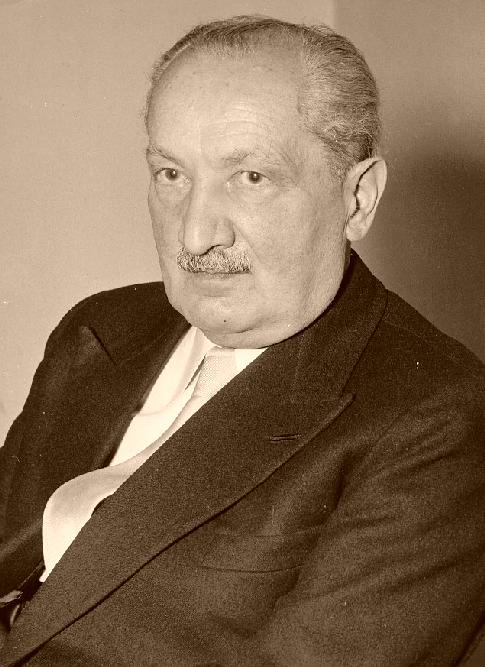 Can I really write a thesis on martyrdom and authentic selfhood and not mention either Heidegger or Kierkegaard?
Kerr's Wittgenstein and abortion
In Fergus Kerr's really interesting last chapter of his book Theology After Wittgenstein he makes this interesting application of Wittgenstein's thought, namely that if a 'metaphysical' concept of the self disappears the objection to abortion may actually be strengthened. This is because the human embryo already is human, and not just potentially one, or one in relation to a metaphysical soul:
The embryo already exists in the closest relationshop of physical dependence on an adult member of our species. Our being human has to be redecsribed as our being animals of a certain kind sharing from the beginning certain possibilities of interaction and response at the very physical level of vital functions. Paradoxically enough, the more animal we remember ourselves to be, the weightier the theological objections to abortion and embryo experimentation might become. p. 177
[As a side comment, I read last year Ray Monk's really moving biography of Wittgenstein. His story captured my attention... particularly when, as a character, he is compared to a man like Bertrand Russell, Wittgenstein stands out as an almost saintly and mystical figure. Well, up to a point! And the photos of Wittgenstein are truly haunting...]
The embryo already exists in the closest relationshop of physical dependence on an adult member of our species. Our being human has to be redecsribed as our being animals of a certain kind sharing from the beginning certain possibilities of interaction and response at the very physical level of vital functions. Paradoxically enough, the more animal we remember ourselves to be, the weightier the theological objections to abortion and embryo experimentation might become. p. 177
[As a side comment, I read last year Ray Monk's really moving biography of Wittgenstein. His story captured my attention... particularly when, as a character, he is compared to a man like Bertrand Russell, Wittgenstein stands out as an almost saintly and mystical figure. Well, up to a point! And the photos of Wittgenstein are truly haunting...]
O'Donovan on Equality

I am re-reading Ways of Judgment in preparation for a Symposium on the book next week. As is his common practice, Oliver O'Donovan will respond to three papers on his own work. This is one of the great things he does, actually: he has responded several times in print to reviews of Desire of the Nations which actually provides a terrific resource for his readers.
Anyways, he says some great things about equality:
The value of human life is equal, because equally infinite, not susceptible of any exchange value. p. 44
There is a hideous bureaucratic element in contemporary thinking about equality which calculates everything, even human life, in dollar terms. The Ford car company notoriously factored in the cost of compensation law suits for wrongful death in their manufacturing of the Pinto (nicknamed 'the barbecue that seats four'...). Equality is not an aspect of justice, but in fact an element of the doctrine of creation. Thinking about equality as justice leads us to this terrible calculation of exchange rates. We never stop counting things...
The hero of his book is Hugo Grotius, whose suggestion for 'attributive justice' O'Donovan is enthusiastic about. Attributive justice is not a theory of justice as such... it is a determination to play each case on its merits. It
elaborates differences. It strengthens relations of affinity and bonds of loyalty, it promites talkent and makes wise appointments to office, it gives opportunities to those who can use them.
Attributive justices recognises the fitness of acting in a certain way on certain occassions. If that sounds vague, that is because it cannot be prescribed ahead of time! Equality plays a different role, a remedial one (we might say).
Wednesday, June 27, 2007
Tuesday, June 26, 2007
Pictures of martyrs

The two questions I get asked most when I say what my thesis about are:
- was Bonhoeffer a martyr?
and
- was Jesus a martyr? 

I always have difficulty offering coherent answers to either. BUT: here are two works of art that confirm an answer in the affirmative to both.
One in a Shropshire church entitled "King of Martyrs"; the other, Bonhoeffer's statue on Westminster Abbey.
Theology After Wittgenstein - Fergus Kerr
 OK, this is one of those books that I should have read years ago, fair enough. Another one of 'em. It is enjoyably and unexpectedly quite chatty.
 Kerr contends that modern theology is imbued with a thoroughgoing Cartesianism - an individualistic view of the self as a disembodied mind. This Cartesian turn, which is not as Augustinian as everyone says, was one of Wittgenstein's great targets: his great white whale you might say. Kerr is quick to show that, actually, Christian theology ought never have been so ready to swallow the Cartesian internalisation of the self.
He makes some fascinating applications of this shattering of Cartesianism:
There is nevertheless a central strain in modern Christian piety which puts all the emphasis on people's secrte thoughts and hidden sins. It gets to the point, in some traditions, that the worst sins of all become those that the individual performs entirely by himself. Wittgenstein recalls us... to the historical contingency of this belief. ... Why should our secret thoughts be more important than the thoughts that come out only too effectively in what we say and do? Are our most secret thoughts always so deep that only God could understand them? Are our most secret thoughts so much more interesting that the thoughts that we communicate? Are our hidden sins so much worse than the sins that we commit against, and with, other people, out in the open, for everybody to see? p. 173
Evangelicalism and Catholicism share this inward turn, it seems to me, though in different ways. Is it a fair cop?
Monday, June 25, 2007
Idolatry and Fertility

The worship of the fertility gods and goddesses expressed through idol worship draws attention to created objects themselves.
Could we say that is the attempt to make the divine immanent through made objects that is (partly) the problem with idolatry? It is not accidental surely that worship of the pagan deities (as portrayed by the OT) is worship of the fertility/agricultural deities is it?
Pseudo-Dionysius II
Reading on into The Mystical Theology, which is described as the key text for Pseudo-Dionysius's thought, I read -
The fact is that the more we take flight upward, the more our words are confined to the ideas we are capable of forming; so that now as we plunge into that darkness which is beyond intellect, we shall find ourselves not simply running short of words but actually speechless and unknowing. [MT 3]
Now, to me a crucial observation about all of this is simply that Pseudo-D seems quite happy to talk about it. Which is to say, he is quite far from speechless. He is quite confident to circumscribe the unknown by his knowledgeable words... this seems problematic to me. If this is so, then his humility is more than a little false.
It is interesting how much the theophany at Sinai is for Pseudo-D a paradigmatic encounter with the divine, in the dark cloud or shadow of the unknowing. And so it might have been if it were not for the incarnation of the Word. In Hebrews 12 we read:
18 You have not come to a mountain that can be touched and that is burning with fire; to darkness, gloom and storm; 19 to a trumpet blast or to such a voice speaking words that those who heard it begged that no further word be spoken to them, 20 because they could not bear what was commanded: "If even an animal touches the mountain, it must be stoned." 21 The sight was so terrifying that Moses said, "I am trembling with fear." 22 But you have come to Mount Zion, to the heavenly Jerusalem, the city of the living God. You have come to thousands upon thousands of angels in joyful assembly, 23 to the church of the firstborn, whose names are written in heaven. You have come to God, the judge of all men, to the spirits of righteous men made perfect, 24 to Jesus the mediator of a new covenant, and to the sprinkled blood that speaks a better word than the blood of Abel...
The fact is that the more we take flight upward, the more our words are confined to the ideas we are capable of forming; so that now as we plunge into that darkness which is beyond intellect, we shall find ourselves not simply running short of words but actually speechless and unknowing. [MT 3]
Now, to me a crucial observation about all of this is simply that Pseudo-D seems quite happy to talk about it. Which is to say, he is quite far from speechless. He is quite confident to circumscribe the unknown by his knowledgeable words... this seems problematic to me. If this is so, then his humility is more than a little false.
It is interesting how much the theophany at Sinai is for Pseudo-D a paradigmatic encounter with the divine, in the dark cloud or shadow of the unknowing. And so it might have been if it were not for the incarnation of the Word. In Hebrews 12 we read:
18 You have not come to a mountain that can be touched and that is burning with fire; to darkness, gloom and storm; 19 to a trumpet blast or to such a voice speaking words that those who heard it begged that no further word be spoken to them, 20 because they could not bear what was commanded: "If even an animal touches the mountain, it must be stoned." 21 The sight was so terrifying that Moses said, "I am trembling with fear." 22 But you have come to Mount Zion, to the heavenly Jerusalem, the city of the living God. You have come to thousands upon thousands of angels in joyful assembly, 23 to the church of the firstborn, whose names are written in heaven. You have come to God, the judge of all men, to the spirits of righteous men made perfect, 24 to Jesus the mediator of a new covenant, and to the sprinkled blood that speaks a better word than the blood of Abel...
Sunday, June 24, 2007
USB ports - help anyone?
The four USB ports on my computer seem to have ceased functioning. What could be the problem, and what can I do about it?
[Advice from those who really know, please!]
[Advice from those who really know, please!]
Saturday, June 23, 2007
Pseudo-Dionysius, scriptural theologian
I am reading Pseudo-Dionysius - the darling of apophatic theology - for the first time. I was rather surprised to read him affirming quite strongly a very orthodox view of the scriptures as revelation of the divine (shows what my prejudices were I guess):
...we must not dare to resort to words or conceptions concerning that hidden divinity which transcends being, apart from what the sacred scriptures have divinely revealed. (The Divine Names 588A).
Which is to say: philosophy ought to be silent concerning God; but there is a given language for God in the Scriptures that we are bound to employ.
Perhaps he was a Barthian?
...we must not dare to resort to words or conceptions concerning that hidden divinity which transcends being, apart from what the sacred scriptures have divinely revealed. (The Divine Names 588A).
Which is to say: philosophy ought to be silent concerning God; but there is a given language for God in the Scriptures that we are bound to employ.
Perhaps he was a Barthian?
Friday, June 22, 2007
'May' vs 'Might'
In English usage, what is the difference between 'may' and 'might'? When might (or is it may) one use 'might' rather than 'may'?
For example is it this:
While Rahner and others might be right in urging a broadening of the concept of martyrdom...
For example is it this:
While Rahner and others might be right in urging a broadening of the concept of martyrdom...
or this:
While Rahner and others may be right in urging a broadening of the concept of martyrdom...
and why?
And who cares?
Transportation as punishment
On 13th May 1787 11 ships loaded to the gunwales with a human cargo set sail from Portsmouth for Botany Bay, in the land of New South Wales discovered by Captain James Cook some seventeen years previously. The 1420 souls aboard – somewhat more than that arrived at the other end – were to begin a colony in the form of a prison under the governorship of Captain Arthur Phillip – a colony built by forced labour at the barrel of the gun and at the crack of the cat o’ nine tails. Their journey must have been as terrifying in prospect as it was remarkable in completion. What could a poorly educated horse thief or pickpocket have imagined lay before him across the sea?
Transportation provides a fascinating case study in the history and methods of criminal punishment. Its need arose out of changing social conditions in England in the 18th century – the increasing urbanisation and population growth in Britain owing to the industrial revolution resulted in a terrific displacement of persons and, naturally, in an increase in crimes against property in particular. Whereas localised crimes of a relatively minor nature could have been dealt with by temporary and economic measures such as the stocks in rural districts, the rapid growth of the anonymous city meant that the means of administering punishments in this way was far less manageable. A village miscreant could have been quickly isolated, condemned and shamed by a community familiar to him or her. In the streets of London, it was easier to slip in and out of the crowd unnoticed.
Transportation was not a new punishment in 1787. But Cook’s discovery of an apparently empty and vast island at the other end of the globe made it a more attractive solution to the perennial problem of punishment. Transportation was, it was argued, more humane than the noose. The prisons of the day were notoriously overcrowded and disease-ridden; and in fact the government had resorted to putting its prisoners in prison-hulks moored on the Thames. More space was needed in the jails. What is more transportation was a means of excreting the waste matter from the body of society for its general health: the community stood only to benefit from the disposal of its more annoying and troublesome members. This was opportunity to lance the boil. It had its deterrent effect, too: New South Wales was to the eighteenth century mind surely further away than the moon is to ours – it was a terrifying prospect. And, it could also be argued, transportation was a great opportunity for the rehabilitation of the convict: if he survived the journey and the beatings and did not starve and served out his seven- or fourteen-year sentence he could find himself presented with all the opportunities of a new life in a new country.
Transportation provides a fascinating case study in the history and methods of criminal punishment. Its need arose out of changing social conditions in England in the 18th century – the increasing urbanisation and population growth in Britain owing to the industrial revolution resulted in a terrific displacement of persons and, naturally, in an increase in crimes against property in particular. Whereas localised crimes of a relatively minor nature could have been dealt with by temporary and economic measures such as the stocks in rural districts, the rapid growth of the anonymous city meant that the means of administering punishments in this way was far less manageable. A village miscreant could have been quickly isolated, condemned and shamed by a community familiar to him or her. In the streets of London, it was easier to slip in and out of the crowd unnoticed.
Transportation was not a new punishment in 1787. But Cook’s discovery of an apparently empty and vast island at the other end of the globe made it a more attractive solution to the perennial problem of punishment. Transportation was, it was argued, more humane than the noose. The prisons of the day were notoriously overcrowded and disease-ridden; and in fact the government had resorted to putting its prisoners in prison-hulks moored on the Thames. More space was needed in the jails. What is more transportation was a means of excreting the waste matter from the body of society for its general health: the community stood only to benefit from the disposal of its more annoying and troublesome members. This was opportunity to lance the boil. It had its deterrent effect, too: New South Wales was to the eighteenth century mind surely further away than the moon is to ours – it was a terrifying prospect. And, it could also be argued, transportation was a great opportunity for the rehabilitation of the convict: if he survived the journey and the beatings and did not starve and served out his seven- or fourteen-year sentence he could find himself presented with all the opportunities of a new life in a new country.
Everard Digges La Touche

My predecessor as a lecturer at Moore College, Everard Digges La Touche, Church of Ireland clergyman and author of a brilliant work of Christology, saw WWI as a holy war against German liberal Protestantism. He joined up to fight against it...
The report of his service is here. I quote an excerpt from it:"At the outbreak of war in 1914, he tried first to join as a chaplain, then in the ranks of the 2nd. Battalion, Australian Inf. In November 1914, he was rejected because of his severe varicose veins, so he immediately went away and had an operation. This meant that he was too late to join the 2nd. Battalion, but as soon as he was well he joined the 13th and rose to Sergeant. You might wonder why this clergyman, who was not in A1 physical condition, and with the responsibility of his wife, Eve, and two young sons, was prepared to go off and fight, but one of his men summed him up, saying "he convinced us of the righteousness of our cause and likened this present struggle for liberty to a Holy Crusade, so when we finally sang "Onward Christian Soldiers", we meant it".
He was commissioned as a 2nd. Lt. in the 2nd. Battalion when an officer was needed to take reinforcements from Alexandria to Gallipoli, for the August attack. On the morning of the 6th, August 1915, he landed his men at Anzac Cove. As a Reinforcement Officer he could then have chosen to go back to Alexandria, but the official historian says that he begged leave to join the attack at Lone Pine. At 5.30, he went over the parapet with the first rush, only to fall, mortally wounded within a few seconds. He managed to roll down the slope of the spur and crawl back into the Australian lines, dying "among his own people" as Charles Bean the Australian war historian described it.”
They don't make 'em like they used to!Thursday, June 21, 2007
The Postmodern Absolute?
I thought this observation by everybody's favourite (non South American) Marxist Catholic Terry Eagleton was intriguing. He's talking about the critique of absolutes by postmodernists, and wondering if they have engaged in some sleight of hand:
It may also be that even postmodernism, with its aversion to absolute foundations, secretly smuggles such an absolute in to the argument. It is not, to be sure, God or Reason or History, but it behaves in just such a bottom-line sort of way. Like these other absolutes it is imossible to delve beneath it. For postmodernism, this is known as Culture... (The Meaning of Life, p. 31)
Culture, indeed. But what is meant by 'Culture' here?
It may also be that even postmodernism, with its aversion to absolute foundations, secretly smuggles such an absolute in to the argument. It is not, to be sure, God or Reason or History, but it behaves in just such a bottom-line sort of way. Like these other absolutes it is imossible to delve beneath it. For postmodernism, this is known as Culture... (The Meaning of Life, p. 31)
Culture, indeed. But what is meant by 'Culture' here?
Tuesday, June 19, 2007
Mark D Thompson on the future of church...
Some great stuff from me learned colleague:
We never want to return to the strict formality and artificiality which characterised at least some Christian gatherings in the past. Gathering with God’s people must mean taking each other seriously as well as the opportunities for service that arise when we are together. The critical difference between ‘church’ and our own private prayer and Bible reading is that we are together, ‘in the fellowship of his people’. And that fellowship must have a sense of reality about it. Precisely for this reason the work of ministry has ‘building each other up’ as a proper concern. But in our rush to address the imbalances of the past and to work together for the good of the body, it is at least theoretically possible to ignore that this happens as we meet with, or better, are met by God in his word. Church is not just a study group or a training centre. Church is a gathering around the powerful, confronting and encouraging address of the living God. Recapturing this sense of the significance of our gatherings might actually prove to be an important part of getting on with the mission.
'nuff said.
Professionalism vs Amateurism in Church: a Third Way?
In church on Sunday the PA was not turned on as the pastor stood up to welcome us AGAIN. It happens every week: and we kind of laugh it off. After all, church is a voluntary society, and we couldn't possibily criticise; people are not professionals, and are offering their time for no payment, and presumably are doing their best etc. We bumble through. (It's a very English way to be!)
You may be able to tell that I am increasingly frustrated with this. And my immediate response is to say 'we need a more professional (American) attitude!'. But then I caught myself: is this word what we want? Do we want 'professionalism?' The production of our church services would be cleaner and tighter and less distracting...after all.
But I don't think 'professional' is right either, and I think we need to expunge all talk of professionalism from our midst! It sends the wrong message. What we need is: nuture of our gifts, and a determination to give the people of God nothing but the best you can possibily do for the sheer love of them and God. What we need is a taking seriously of the need to nuture and perfect and practice our gifts as a way of honouring them as God-given for the purpose of up-building his church.
You may be able to tell that I am increasingly frustrated with this. And my immediate response is to say 'we need a more professional (American) attitude!'. But then I caught myself: is this word what we want? Do we want 'professionalism?' The production of our church services would be cleaner and tighter and less distracting...after all.
But I don't think 'professional' is right either, and I think we need to expunge all talk of professionalism from our midst! It sends the wrong message. What we need is: nuture of our gifts, and a determination to give the people of God nothing but the best you can possibily do for the sheer love of them and God. What we need is a taking seriously of the need to nuture and perfect and practice our gifts as a way of honouring them as God-given for the purpose of up-building his church.
Monday, June 18, 2007
O'Donovan on punishment II
In his chapter on punishment, O'Donovan carefully distinguishes between divine and human punishment so as to show human punishment its limited scope. But in doing so, he shows that punishing is something that God does:
Ontologically native to God, punishment takes some excusing in terms of extrinsic goods, when practices among consanguinous humankind. Ways of Judgment p.114
It is a side-comment only, but a huge statement in the context of contemporary theology: punishment - ie, 'a judgment enacted on the person, property, or liberty of the condemned party’ is something not foreign but rather proper to God, requiring no other justification other than that it is an exercise of his supreme dominion.
Ontologically native to God, punishment takes some excusing in terms of extrinsic goods, when practices among consanguinous humankind. Ways of Judgment p.114
It is a side-comment only, but a huge statement in the context of contemporary theology: punishment - ie, 'a judgment enacted on the person, property, or liberty of the condemned party’ is something not foreign but rather proper to God, requiring no other justification other than that it is an exercise of his supreme dominion.
Saturday, June 16, 2007
Ruth Gledhill on Wycliffe
Well blow me down, Ruth Gledhill has written just about the only sensible article on the Wycliffe affair. Now, lets be clear - The Times has had a job to win me over after a frankly appalling article on the Sydney diocese a few years back (was it 20+ factual errors? I forget: it was basically copied it out of a hatchet job in Theology by a chap called Humphrey Southern). But this piece is a professional piece of journalism that doesn't make opinion into fact (Stephen Bates' stock-in-trade). Amazing!
IMPORTANT CORRECTION: the offending article was NOT written by Ruth Gledhill as I originally claimed but by her colleague Mary Ann Sieghart. It is a true shocker (a 'Barry Crocker' as we call it back home). See for yourself:
http://www.timesonline.co.uk/tol/comment/columnists/mary_ann_sieghart/article830129.ece
IMPORTANT CORRECTION: the offending article was NOT written by Ruth Gledhill as I originally claimed but by her colleague Mary Ann Sieghart. It is a true shocker (a 'Barry Crocker' as we call it back home). See for yourself:
http://www.timesonline.co.uk/tol/comment/columnists/mary_ann_sieghart/article830129.ece
Thursday, June 14, 2007
Atheism in vestments
Despite the overt atheism of most of the leading postmodern thinkers, their concern for explicitly theological themes is obvious. Indeed, “fascination” would not be an inappropriate word to use.[1] Several theologians, for their part, have responded by a complete embrace of postmodern anti-logocentricism and espoused a postmodern via negativa, drawing on an aspect of the Christian tradition represented by Pseudo-Dionysius, Meister Eckhart and others. Daniel Bulzan agrees that the postmodern and the apophatic are very similar.[2] Kevin Hart (an Australian!) ignores the protestations of Derrida himself and argues that negative theology is a form of deconstruction.[3] For him, only negative theology resists deconstruction. He writes:
Negative theology, properly understood, is that theology...which works at once inside and outside onto-theology, submitting its images of God to deconstruction.[4]
However, negative theology has been baptised via Greek thought about God in terms of attributes; and postmodernity has not freed itself from this mode of discourse. As Ingraffia points out, negative theology remains part of a Hellenist dialiectic with positive theology; and remains far from the biblical God who has revealed himself.[5] Bulzan, in response to Don Cupitt and Mark C. Taylor, points to the collapse of personal identity in the mystic and the postmodern; and the need for a properly biblical theology of language that would clarify its link with creation and ontology. Indeed, those theologians for whom postmodernity is a given are little more than Feuerbachian anthropologists for whom God is not even absconditus, but mortuus. Ward rightly complains that
The theological, stripped of any transcendence, becomes the incarnational to the point at which a Christian atheism emerges.[6]
It is merely an “atheism in vestments.”[7]
[1] G. Ward, “Theology and Postmodernism”, 435
[2] D.Bulzan, “Apophaticism, Postmodernism and Language: Two Similar Cases of Theological Imbalance” in Scottish Journal of Theology 50/3 (1997) 261-287
[3] K.Hart, op.cit., p.186
[4] ibid.
[5] B. Ingraffia, op.cit., p.226-7
[6] G.Ward, “Postmodern Theology” in D.F. Ford (ed.), The Modern Theologians (Oxford: Blackwell, 2nd ed. 1997), p.591
[7] F.C.Bauerschmidt, “Aesthetics - The Theological Sublime” in J. Milbank et al (eds.), Radical Orthodoxy (London: Routledge, 1999), p.217
Negative theology, properly understood, is that theology...which works at once inside and outside onto-theology, submitting its images of God to deconstruction.[4]
However, negative theology has been baptised via Greek thought about God in terms of attributes; and postmodernity has not freed itself from this mode of discourse. As Ingraffia points out, negative theology remains part of a Hellenist dialiectic with positive theology; and remains far from the biblical God who has revealed himself.[5] Bulzan, in response to Don Cupitt and Mark C. Taylor, points to the collapse of personal identity in the mystic and the postmodern; and the need for a properly biblical theology of language that would clarify its link with creation and ontology. Indeed, those theologians for whom postmodernity is a given are little more than Feuerbachian anthropologists for whom God is not even absconditus, but mortuus. Ward rightly complains that
The theological, stripped of any transcendence, becomes the incarnational to the point at which a Christian atheism emerges.[6]
It is merely an “atheism in vestments.”[7]
[1] G. Ward, “Theology and Postmodernism”, 435
[2] D.Bulzan, “Apophaticism, Postmodernism and Language: Two Similar Cases of Theological Imbalance” in Scottish Journal of Theology 50/3 (1997) 261-287
[3] K.Hart, op.cit., p.186
[4] ibid.
[5] B. Ingraffia, op.cit., p.226-7
[6] G.Ward, “Postmodern Theology” in D.F. Ford (ed.), The Modern Theologians (Oxford: Blackwell, 2nd ed. 1997), p.591
[7] F.C.Bauerschmidt, “Aesthetics - The Theological Sublime” in J. Milbank et al (eds.), Radical Orthodoxy (London: Routledge, 1999), p.217
Wednesday, June 13, 2007
O'Donovan on Just War and Martyrdom
 It is hard to please everyone all the time.
When it comes to martyrdom, I think OMTO'D has the lines just right here:
...a Christian witness to God's peace must always be acted out agianst the horizon of suffering and martyrdom. Suffering and martyrdom mark the point at which the possibilities of true judgment run out within the conditions of the word. They are necessary components of Christian practical reason, because they demonstrate the vulnerability of the praxis of judgment, and so protect it from serious misunderstanding. Judgment is an undertaking always under threat within the terms of this world, always liable to be overwhelmed by violence. It cannot possibly issue a licence to avoid defeat by all possibe means...Yet the horzon on which we are called to suffer and to die rather than wrong our neighbour is not reached before we actually reach it. The possibilities of active witness to God's peace are not exhausted until we have exhausted them, which we will not have done if have not explored them. In this context...the dutuies which confront us do not BEGIN with martyrdom; they END with it, when we have gone as far as we are permitted to go, done as much as we are permitted to do. Martyrdom is not, in fact, a strategy for DOING anything, but a testimony to God's faithfulness when there is nothing left to do. p. 9-10
I love that: martyrdom is no strategy. How could it be?
Is Jazz the Meaning of Life?
Terry Eagleton is one of my favourite literary critics. Formerly a Marxist, he has always stood against the tide of the obsession with theory. These days, so I understand, he is trading as a Catholic. His review of Dawkins' book was absolutely outstanding.
He talks about human freedom in terms of a jazz ensemble - a nice metaphor. You improvise, but you play in terms of the group. But then:
Is jazz, then, the meaning of life? Not exactly. The goal would be to construct this kind of community on a wider scale, which is a problem of politics. It is, to be sure, a utopian aspiration, but it is none the worse for that. [Old Marxists never die!] The point of such aspirations is to indicate a direction, however lamentably we are bound to fall short of the goal. What we need is a form of life which is completely pointless, just as the jazz perfomrance is pointless. Rather than serve some utilitarian purpose or earnest metaphysical end, it is a delight in itslef. It needs no justification beyond its own existence. In this sense, the meaning of life is interestingly close to meaninglessness. Religious believers who find this version of the meaning of life a little too laid-back for comfort should remind themselves that God, too, is his own end, ground, origin, reason and self-delight, and that only by living this way can human beings be said to share in his life. p. 174
He talks about human freedom in terms of a jazz ensemble - a nice metaphor. You improvise, but you play in terms of the group. But then:
Is jazz, then, the meaning of life? Not exactly. The goal would be to construct this kind of community on a wider scale, which is a problem of politics. It is, to be sure, a utopian aspiration, but it is none the worse for that. [Old Marxists never die!] The point of such aspirations is to indicate a direction, however lamentably we are bound to fall short of the goal. What we need is a form of life which is completely pointless, just as the jazz perfomrance is pointless. Rather than serve some utilitarian purpose or earnest metaphysical end, it is a delight in itslef. It needs no justification beyond its own existence. In this sense, the meaning of life is interestingly close to meaninglessness. Religious believers who find this version of the meaning of life a little too laid-back for comfort should remind themselves that God, too, is his own end, ground, origin, reason and self-delight, and that only by living this way can human beings be said to share in his life. p. 174
Monday, June 11, 2007
Rahner vs Balthasar: martyrdom in contemporary Roman Catholicism II

Balthasar’s small work specifically on martyrdom relates to grander themes in his entire oeuvre; however, it particularly reflects Balthasar’s dismay at Rahner’s famous ‘anonymous Christian’ idea. Balthasar points out that is precisely at the point of martyrdom that this notion becomes untenable. Rahner stands accused of switching the moment of decision for the Christian from the encounter with the crucified Christ which demands our faith to the moment when one is – as any human person is – met by the need of the neighbour for love. That is not to say that Balthasar is opposed to the works of love that might result in a bloody martyrdom: only that this is not the point of decision for the Christian, the Ernstfall which generates the life that follows. That belongs only to the cross and resurrection of Christ. It is only from these events that the Christian life truly springs:
What then should a Christian be? He should be one who offers up his life in the service of his fellow man because he owes his life to Christ crucified.
While Rahner and others might be right in urging a broadening of the concept of martyrdom, they do not sufficiently ties it back in the events that gave it birth. Witness-bearing, for Balthasar, may take a variety of forms, granted. What Balthasar wants to re-assert is that martyrdom is an ‘act’ of faith – and that faith as faith in the God of Jesus Christ:
Man becomes aware of the nature of his particular mission in life when he calmly puts his trust in God. But whatever particular Christian state the believer may live in, he lives as one who has died and been resurrected, because his while existence is an attempt to make a loving and thankful response to God ‘by faith in the Son of God, who loved me and gave himself for me’ (Gal 2:20).
Balthasar’s suggestion helps not to foreclose the possible range of consequences of a life of authentic Christian witness (which is the concern of Rahner and Boff); but also ties it inextricably to the work of Christ in the believer, such that it could never be said that martyrdom anything other than a divine act.
Hauerwas on Narrative theology
A key question for narrative theologians is this: 'how may the claims of a story to shape our lives be judged?'
Stanley Hauerwas offers four “working criteria”, without claiming for his list completeness or absolute clarity:
First, a story must display the power to release us from destructive alternatives.
It must, secondly, it must display ways of seeing through current distortions.
Thirdly, it ought to allow room to keep us from having to resort to violence.
Lastly, it should show a sense for the tragic: how meaning transcends power.
This list of criteria appears to be a little arbitrary, or linked to Hauerwas’ own ethical preferences (for non-violence, for example). Has he at this point reintroduced some abstract ethical ideas having previously disavowed them? Perhaps this is the weakness of the narrative turn that Hauerwas advocates: are these criteria prior to, or the result of a narrative understanding of discourse? Even despite his protestations about the provisionality of his criteria, there is no clear answer given (in this essay) as to how these have arisen. One proposal at this stage would be for an appeal to a master-story – namely the one that Christians tell about Jesus Christ and his Father - that narrates these criteria as the ones by which subsidiary stories ought to be evaluated (and adopted or rejected); and I suspect this is what Hauerwas has in fact done (and does do in practice) but appears to conceal somewhat. Towards the end of his essay, he more explicitly suggests that it is the acceptance of certain stories as “canonical” that marks religious faith. What this means in effect is that through these stories recognized as canonical we “discover our human self”, and are able to judge the adequacy of “alternative schemes for humankind”. Again, we need to ask “why are these stories canonical?” Isn’t this shifting the plausibility problem rather than answering it?
Further, Hauerwas’ criteria appear to ask which narrative works best, leaving him open to the charge of pragmatism. He freely concedes that there may be a plurality of narratives that meets his criteria. However, if these narratives make contradictory, even inimical claims about the world, and God, but work equally well to (say) steer us from violence, are we not able to make further discrimination between them? Are the differences between them merely irrelevant in that case? For those who inhabit these competing stories, it is unlikely to be an easy matter to cast off some parts of the narrative as unimportant.
There are many stories that do not exhibit these criteria and yet have claims to shape our lives. In our time as in the ancient world, stories of violent vengeance make powerful and popular appeal to the ideal of individual, extra-legal action to resolve outstanding moral business. Violence is essential for a feeling of justice in the resolution of these tales. This is even now advocated by Peter A. French, The Virtues of Vengeance ([Lawrence]: University Press of Kansas, 2001), who analyses the pursuit of vengeance in Western films like The Searchers and Unforgiven. Hauerwas would, no doubt, say that these are “bad” stories...But then, he already decided this on - well what grounds exactly?
Stanley Hauerwas offers four “working criteria”, without claiming for his list completeness or absolute clarity:
First, a story must display the power to release us from destructive alternatives.
It must, secondly, it must display ways of seeing through current distortions.
Thirdly, it ought to allow room to keep us from having to resort to violence.
Lastly, it should show a sense for the tragic: how meaning transcends power.
This list of criteria appears to be a little arbitrary, or linked to Hauerwas’ own ethical preferences (for non-violence, for example). Has he at this point reintroduced some abstract ethical ideas having previously disavowed them? Perhaps this is the weakness of the narrative turn that Hauerwas advocates: are these criteria prior to, or the result of a narrative understanding of discourse? Even despite his protestations about the provisionality of his criteria, there is no clear answer given (in this essay) as to how these have arisen. One proposal at this stage would be for an appeal to a master-story – namely the one that Christians tell about Jesus Christ and his Father - that narrates these criteria as the ones by which subsidiary stories ought to be evaluated (and adopted or rejected); and I suspect this is what Hauerwas has in fact done (and does do in practice) but appears to conceal somewhat. Towards the end of his essay, he more explicitly suggests that it is the acceptance of certain stories as “canonical” that marks religious faith. What this means in effect is that through these stories recognized as canonical we “discover our human self”, and are able to judge the adequacy of “alternative schemes for humankind”. Again, we need to ask “why are these stories canonical?” Isn’t this shifting the plausibility problem rather than answering it?
Further, Hauerwas’ criteria appear to ask which narrative works best, leaving him open to the charge of pragmatism. He freely concedes that there may be a plurality of narratives that meets his criteria. However, if these narratives make contradictory, even inimical claims about the world, and God, but work equally well to (say) steer us from violence, are we not able to make further discrimination between them? Are the differences between them merely irrelevant in that case? For those who inhabit these competing stories, it is unlikely to be an easy matter to cast off some parts of the narrative as unimportant.
There are many stories that do not exhibit these criteria and yet have claims to shape our lives. In our time as in the ancient world, stories of violent vengeance make powerful and popular appeal to the ideal of individual, extra-legal action to resolve outstanding moral business. Violence is essential for a feeling of justice in the resolution of these tales. This is even now advocated by Peter A. French, The Virtues of Vengeance ([Lawrence]: University Press of Kansas, 2001), who analyses the pursuit of vengeance in Western films like The Searchers and Unforgiven. Hauerwas would, no doubt, say that these are “bad” stories...But then, he already decided this on - well what grounds exactly?
Richard Rorty - the priority of democracy to philosophy
Richard Rorty is a more than somewhat provocative thinker. In an essay entitled 'The Priority of Democracy to Philosophy' he puts forward the pragmatic argument that, as his title suggests, what really should concern us is the forging of democratic agreements on which some progress can be achieved, rather than speculating on unsolveable philosophical issues. Liberal democracy should give up pretending that it is founded on a grand metaphysical principles like 'rights' etc and instead realise that it is merely the best working solution to the problem of political community. So, he writes:
The philosophical tradition has assumed that there are certain topics (for example, 'what is God's will?' 'What is man?'...) on which everyone has, or should have, views and that these toics are prior in the order of justification to those at issue in political deliberation. This assumption goes along with the asumption that hman beings have a natural center that philosophical inquiry can locate and illuminate. By contrast, the view that human beings are centerless networks of beliefs and desires and that their vocabularies and opinions are determined by historical circumstance allows for the possibility that there may not be enough overlap between two such networds to make possibile agrement about political topics, or even profitable discussion of such topics.
Truth, in the Platonic sense is 'simply not relevant to democratic politics'. Neither is a notion of the self: even a very loose and postmodern one. You just don't need to bother yourself with it! Now, you gotta like that for straight shooting!
He goes on:
The encouragement of light-mindedness about traditional philosophical topics serves the same purposes as does the encouragement of light-mindedness about traditional theological toics. Like the rise of large market economies, the increase in literacy, the proliferation of artistic genres, and the insouciant pluralism of contemporary culture, such philosophical superficiality and light-mindedness helps along the disenchantment of the world. It helps make the world's inhabitants more pragmatic, more tolerant, more liberal, more receptive to the appeal of instrumental rationality.
Well, what a relief!
The philosophical tradition has assumed that there are certain topics (for example, 'what is God's will?' 'What is man?'...) on which everyone has, or should have, views and that these toics are prior in the order of justification to those at issue in political deliberation. This assumption goes along with the asumption that hman beings have a natural center that philosophical inquiry can locate and illuminate. By contrast, the view that human beings are centerless networks of beliefs and desires and that their vocabularies and opinions are determined by historical circumstance allows for the possibility that there may not be enough overlap between two such networds to make possibile agrement about political topics, or even profitable discussion of such topics.
Truth, in the Platonic sense is 'simply not relevant to democratic politics'. Neither is a notion of the self: even a very loose and postmodern one. You just don't need to bother yourself with it! Now, you gotta like that for straight shooting!
He goes on:
The encouragement of light-mindedness about traditional philosophical topics serves the same purposes as does the encouragement of light-mindedness about traditional theological toics. Like the rise of large market economies, the increase in literacy, the proliferation of artistic genres, and the insouciant pluralism of contemporary culture, such philosophical superficiality and light-mindedness helps along the disenchantment of the world. It helps make the world's inhabitants more pragmatic, more tolerant, more liberal, more receptive to the appeal of instrumental rationality.
Well, what a relief!
Friday, June 08, 2007
The Joshua Tree
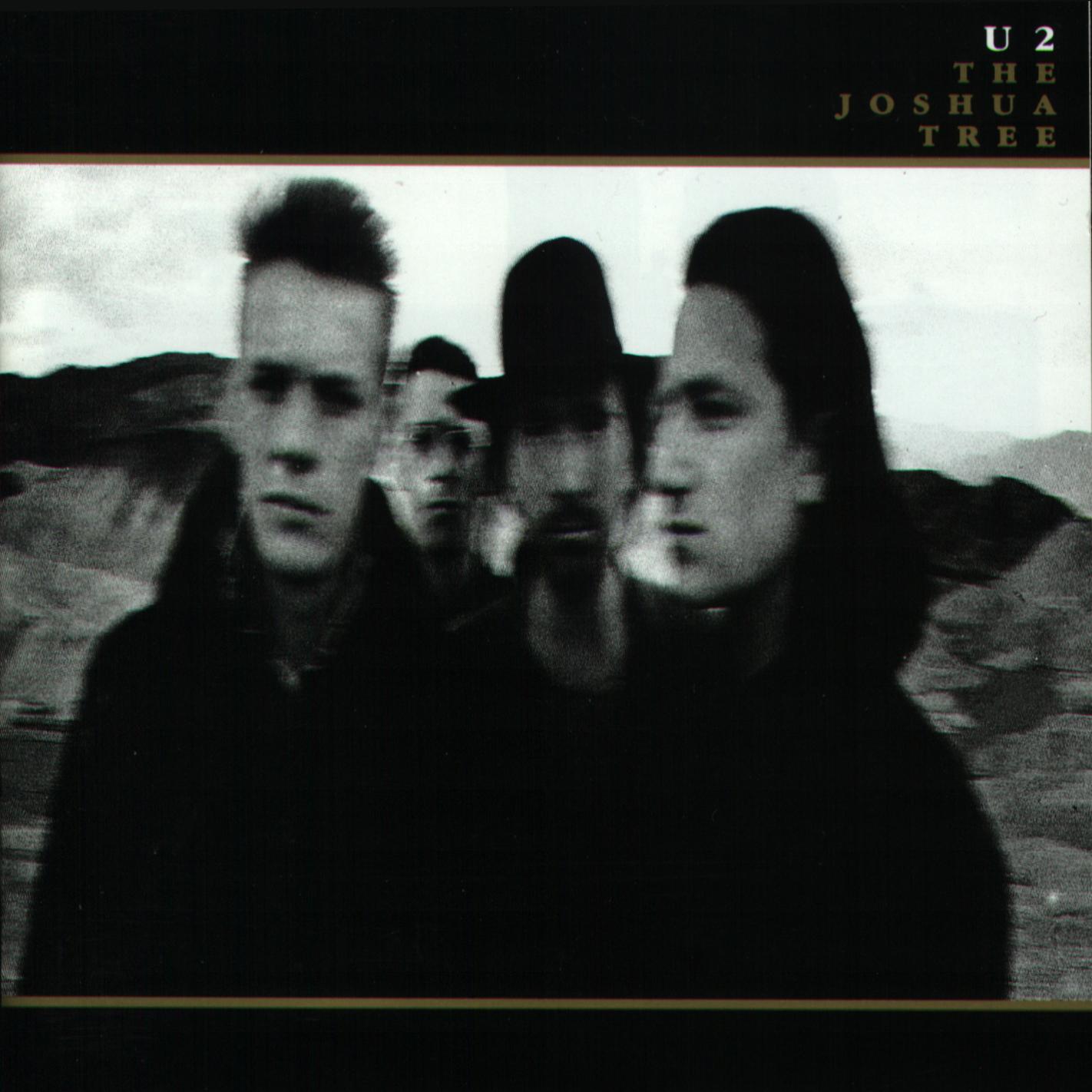 I recently purchased the CD version of U2's 1987 classic The Joshua Tree. I bought the vinyl version the day it became available 20 years ago. I was 17 and already a fan of U2, so I was not coming to it cold. But I don't think this album has ever been surpassed in all their catalogue.
It has what the truly great albums have, and that is a thematic and musical continuity. What I mean is that you have to listen to the songs as a collection of songs: they inform one another, echo back of each other. U2 badly wanted for this in The Unforgettable Fire 1984, but spoiled it by overdone production and a couple of their lamest tracks ever ('Elvis Presley in America', 'Indian Summer Sky'). The missed again with Rattle and Hum, a tediously long album with at times all their tendency to self-righteousness and pomposity on display ('Silver and Gold').
None of that is here, though there are 'issues' and 'issue songs'. America is the theme, but so are death and loss and grief. The people in the songs expressing longing and don't yet see the way to answer it. The ambiguity of faith and doubt in 'I Still haven't Found What I'm Looking For' is matched by the love-hate of 'With or Without You'. And so on. Morever it is an album with a landscape: it seems to refer to places so often...
Anyhow - here are 8 album highlights for me:
1 - Bono's hope of meeting his dead friend again 'when the stars fall from the sky' in 'One Tree Hill'. Here is a man in his mid-twenties realising he is mortal. It hurts. But here is a song with an eschatology. A song about grief in a major key.
2- Edge's major 7th note in the guitar part of 'I still haven't found what I am looking for' - this ONE note sums up the whole song.
3 - the Helicopter drums in 'Where the Streets have no name'.
4 - bass line in 'Bullet the Blue Sky', my favourite all time U2 song.
5 - 'fighter planes' guitar effects, same song.
6 - 'Running to a Stand Still' - how can something so sweet be made of so few components.
7 - The major key and brightness of 'Red Hill Mining Town' which is talking about the end of generations of working in the same place. There IS something left to hold on to...
8 - Bono's talking in 'Bullet the Blue Sky'. The cheesiest moment on the album perhaps? But it works.
Ricoeur on punishment
Reading Ricoeur has been very stimulating, though at times he comes accross almost as a naive thinker. He says this in a touching essay about the excess of grace, called 'the Logic of Jesus, the Logic of God':
...are we not invited to discern even in the most just punishment, the disquieting countenance of wrath and vengeance? It is good that, goaded by the paradoxes of Jesus we would distrust our better works. But it is not only a question of distrust Does not the more positive way become for us deliberately to orient punishment to improvement rather than expiation? Because on which side is the gospel? Is it on the side of the vengeance of society or on the isde of the rehabilitation of the culpable?
This is well said: a Christian ethics of punishment must stem from the evangel of mercy, surely... And yet, Western society is speeding fast away from this logic.
...are we not invited to discern even in the most just punishment, the disquieting countenance of wrath and vengeance? It is good that, goaded by the paradoxes of Jesus we would distrust our better works. But it is not only a question of distrust Does not the more positive way become for us deliberately to orient punishment to improvement rather than expiation? Because on which side is the gospel? Is it on the side of the vengeance of society or on the isde of the rehabilitation of the culpable?
This is well said: a Christian ethics of punishment must stem from the evangel of mercy, surely... And yet, Western society is speeding fast away from this logic.
Cuteness and its relevance for ethics
 Yesterday I killed a baby.
It was a baby squirrel. I saw it on the grass, its cute head poking out with its big doey eyes. Only then I noticed that it had fallen from a tree and had broken its back and was obviously dying a slow and painful death. So, I pulled off my right boot and administered the coup de grace - a violent and savage act which felt very unfamiliar to me in my protected suburban experience. Its little body lies on the lawn now, drenched with the overnight rain.
In discussions about abortion and other ethical issues the emotive and splenetic reactions of those involved are often discarded. To be thoroughly rational and modern people, we are supposed to relativise our emotional responses, or protect ourselves from them. We can accept abortion but not infanticide because we can easily protect ourselves from the cuteness of the baby involved: it is a face hidden from us, a ghostly presence we can shield ourselves from. We are afraid that we will love what we see, so we try hard not to look. Strangely, we know our own 'weakness' - our recidivism as far as guilt goes and so on, and our attachment to cute things. There is a feeling of contempt for those who act merely out of emotion.
But shouldn't our feelings - whether of compassion or disgust or sorrow - be rather a guide for us ? Isn't our capacity for empathy one of the best things that human beings have to help us make moral decisions? To be sure, we can manipulate this tendency: the animal rights/anti-abortion campaigners who show us shocking images of dismembered babies and tortured animals play on our disgust as much as our tenderness. But they are onto something, aren't they? Not to say of course that we should act only out of our visceral reactions to things; only rather to suggest that this visceral reaction is not as unhelpful and distorting as we might think. We are meant, as new parents (for example) to fall for our babies, because we are meant to care for them. Cuteness protects children from infanticide, or ought to.
Jesus himself was often moved by the plight of those he encountered. He appears rather prone to follow his gut reaction, if truth be told! He sees the leaderlessness of Israel, or the corruption of the temple courts, or the pain-racked body before him, and he is quite clearly - and physically - 'moved' to action.
As for the squirrel: I noticed that in deciding to end its life I had to both feel and think. My response to its cuteness and then shock at its pain meant that I had think how to act in a way that cared (in a small way) for it. It wasn't the dilemma of the century of course! And, I don't feel that its cuteness is overcome or put aside by thinking through what the most practical and reasonable thing to do was. I still feel a small sorrow for the squirrel.
Helen Garner – Joe Cinque’s Consolation: A True Story of Death, Grief and the Law
[For non-Australian readers: Helen Garner is one the best contemporary Australian writers.]
Joe Cinque is dead.
It was his girlfriend, Anu Singh, a pretty and bright law student at ANU who injected him first with Rohypnol (the “date-rape” drug) and then an overdose of heroin; and did nothing during the several hours it took him to die. Her confused and desperate call to the ambulance was too little, too late.
It was a bizarre killing: made even more so by the revelations that Singh had held a dinner party in the days before at which she had made no secret of her intent to carry out a murder-suicide. But then, our newspapers are full of bizarre killings. So what drove Helen Garner to write about this case?
Garner can’t quite explain it. As she tells it, she happened across the story at a moment of personal crisis for her:
… I had recently been forced to acknowledge that I was a woman at the end of my tether. I was fifty-five. My third marriage had just collapsed in a welter of desolation. I was living alone in Sydney, in a rented flat, on the fifth floor of a building on the top of a hill. I had no job, and lacked the heart to look for one. I knew I had to get out of my own head, to find some work to do. (p.13)
Garner admits that her interest in the crime was at least at first because she wanted to look at a woman tried with murder. Feeling pain, anger and humiliation, she wanted to know “if anything made them different from me”. (p.25) There is no illusion of mere objectivity in Garner’s non-fiction: that of an absent, disinterested observer. Garner is as much a character in the narrative as Anu Singh and Joe Cinque’s mother. And it is the rawness of Garner’s hurt spirit that gives her the ability to record so sensitively the pain, bewilderment and grief of others.
The narrative of the book begins in the court case against Anu Singh. Garner is able to reflect on her own petty snap judgments and bitchiness as she finds herself intuitively disliking Anu Singh. But her intuitions haven’t let her down: though she is unable to interview the young woman and her accomplice, she speaks to acquaintances, to her father and combs over the court documents.
Singh does not come over well (unsurprisingly): she is obsessive and manipulative, on Garner’s account; she shirks the responsibility of her actions by pleading psychiatric illness. Her father, a Dr Singh, appears likewise appallingly self-centred and greedy, oblivious to the real pain in Cinque’s family. Under cross-examination Dr Singh, asked about his religious beliefs and those of his daughter, replies “She is too young to have any beliefs.” (p.29) The reader is left to infer that such beliefs may have saved Anu from herself. The psychiatric evidence seems unable to explain the “simple wickedness” at the heart of the story.
Garner finds herself dismayed by the short sentence handed out to Singh. And so the focus of her story turns to Joe’s mother, Maria. Striking up a real friendship with Maria and her family, she finds that justice system as not mollified their grief and anger. Through these interviews, Garner finds her self compelled to keep on with the project of the book because something remains deeply unsatisfied and unsatisfying in the story. Joe Cinque’s blood is, we might say, crying out from the ground.
Towards the end of the book, Garner seeks out the judge in the case, Justice Ken Crispin. This is a telling conversation. Crispin, an active Christian, is convincing in word and person, and does not resile from the moral difficulties of the case. He admits that Madhavi Rao, Singh’s friend, failed in her duty of care to Joe Cinque – knowing what was happening but doing little to intervene - but that the law does not make this criminal.
But deep questions remain. As Garner puts it:
I listened to him without arguing. But I was thinking, Where does all the woundedness, the hatred go? What becomes of the desire for vengeance, for a settling of the score? (p.318)
But though she suspects how the Christian Crispin might answer - that this is the province of the Almighty – she holds the question back because “we weren’t in a church. We were in the Supreme Court, the temple of reason.” (p.320) I think this was a pity: while I respect Helen Garner’s amazing courage in her quest, I think that this bracketing of religious discussion out of the public forum leaves a vacuum that Garner struggles to fill. I suspect that she herself knows this.
What she discovers is that human justice struggles at the point of atonement. As Justice Crispin says, very rarely in the sentencing process is satisfaction achieved. So we cry out again and again with Garner, where does it go? Where, O God, does it go?
At the sentencing of Anu Singh, Joe Cinque’s parents had made a speech to the waiting media in front of the court saying that they hoped that somebody would kill one of the judge’s children so that he would understand. What they didn’t know at this stage is that this judge had indeed lost a child. He knew something of their griefs; he was not unlike them in their suffering.
In the end, Garner offers the book to the Cinque’s as their “consolation” – a word evoking the momentous declaration of Isaiah 40:1. And what is their consolation? The book remembers Joe, and defends him. In the end Anu Singh and her calamitous behaviour fade: and what Garner leaves us with is a celebration of the life of this ordinary, dearly loved boy.
Tuesday, June 05, 2007
Rahner and Cavanaugh: martyrdom in Roman Catholicism
 Karl Rahner has been among the most prominent voices urging for such a broadening of the notion of martyrdom. Traditionally, those who have died in active struggle have been excluded from consideration as martyrs, however righteous the cause. While he recognizes the important caveats that must be observed (in order to exclude, for example, the crusading knights of the Middle Ages), Rahner argues that this element of active struggle often springs directly from a pure inner conviction about Christ:
…the death Jesus ‘passively endured was the consequence of the struggle he waged against those in his day who wielded religious and political power. He died because he fought: his death must not be seen in isolation from his life. Putting this argument the other way around, someone who dies while fighting actively for the demands of his or her Christian convictions…can also be said patiently to endure his or her death.
He is joined in this plea by the liberation theologian Leonardo Boff, who, hearkening back to Origen (over the head of Augustine) argues for the inclusion of ‘political martyrs’: by which he means to indicate those who witness to the truth of the kingdom in active struggle against oppression. The emphasis within this conception of martyrdom falls almost entirely on the activity performed by the martyr, and its (presumed) resemblance to the teaching and action of Christ himself. This has of course a particular application in the Latin American context in which liberation theology arose. However, the difficulty that Boff runs into (and Rahner risks) is that he makes abstract principles distilled from the life of Christ by whatever hermeneutical process fundamental to the recognition of a martyr aside from the actual narrative of that life. As William Cavanaugh puts it (speaking of Boff and fellow theologian Sobrino) they ‘assume that the content of Christ’s life, death and resurrection can be isolated apart from their form’. If martyrdom is reduced in this way to some principle – ‘love’ or ‘justice’ – apart from imitating the pattern of Christ’s life, then it is susceptible to becoming criteria-less. It loses its distinctly Christ-like characteristics that might mark it out from other sorts of acts. Cavanaugh continues:
The imitation of Christ is not reducible to some principle such as “love”, but is rather a highly skilled performance learned in a disciplined community of virtue by careful attention to the concrete contours of the Christian life and death as borne out by Jesus and the saints.
Perhaps one of the problems here is in the Roman Catholic need to identify exactly who is and who isn't a martyr/saint...
The Ugley Vicar: What’s really wrong with English Conservative Evangelicalism
This is a fascinating insiders critique of uk Conservative evangelicalism
here
Having said that he also has a go at the 'open' evangelicals too,
here
It is time to ask open evangelicals whether blood is thicker than water... if you look at the Fulcrum site (on which there is much GREAT material) you get the impression that the only enemies of the gospel in the C of E are the conservative evangelicals. Really.
here
Having said that he also has a go at the 'open' evangelicals too,
here
It is time to ask open evangelicals whether blood is thicker than water... if you look at the Fulcrum site (on which there is much GREAT material) you get the impression that the only enemies of the gospel in the C of E are the conservative evangelicals. Really.
Alasdair MacIntyre on 'morality'
 MacIntyre makes a great critique of what we call 'ethics' or 'morality': which these days seems to be shunted off into committees, of all things...
...there is no word correctly translated by our moder word 'morality' in any ancient or medieval language. And this lack of a word is a symptom of the different way s in which different forms and aspects of social life were classified in the societies in which those languages were spken and written.... [ he notes that this is true of 'art' as well...] ... so when later modern historians of ethics...have extracted from the writings of ancient or medieval authors that which, according to the modern conception, belongs to ethics, we have too often projected back on to the past categories alien to that past with two highly misleading results. p. 191
In sum:
1 - we detach arbitrarily parts from wholes without which they become distorted, and;
2 - we obscure that moment when 'morality' becomes a distinct category from ourselves.
Monday, June 04, 2007
JP II on martyrdom
 Always a canny fellow, John Paul II wrote often about martyrdom and its significance for all humanity as well as for his church. Check this out:
Martyrdom, accepted as an affirmation of the inviolability of the moral order, bears splendid witness both to the holiness of God's law and to the inviolability of the personal dignity of man, created in God's image and likeness. This dignity may never be disparaged or called into question, even with good intentions, whatever the difficulties involved. Jesus warns us most sternly: "What does it profit a man, to gain the whole world and forfeit his life? " (Mk 8:36).
Martyrdom rejects as false and illusory whatever "human meaning" one might claim to attribute, even in "exceptional" conditions, to an act morally evil in itself. Indeed, it even more clearly unmasks the true face of such an act: it is a violation of man's "humanity", in the one perpetrating it even before the one enduring it. Hence martyrdom is also the exaltation of a person's perfect "humanity" and of true "life", as is attested by Saint Ignatius of Antioch, addressing the Christians of Rome, the place of his own martyrdom: "Have mercy on me, brethren: do not hold me back from living; do not wish that I die... Let me arrive at the pure light; once there I will be truly a man. Let me imitate the passion of my God".
I enjoy here the connection between human identity/ meaning and martyrdom, and how martyrdom both at once is the destruction of a human being's humanity and also the unmasking of the inhumanity in the perpetrator and in addition the vindication of the humanity of the martyr (as far as God is concerned). Of course, the Passion of Christ is the model - think how Mark interweaves all of these aspects.
Searching for the way to say it...
Two questions of finding the write theological language confront me as I write:
1 - I keep wanting to say 'God' and 'human' as if they are opposites, but it strikes me that this isn't as simple as it looks. So, for example when I write -
Christian martyrdom is an act of God, not of human beings
- isn't this a false dichotomy because of Jesus Christ, who makes possible a kind of divine-human act? Isn't the opposition more between divine and non-divine? Is that the right language?
2 - I keep going to write 'the Church' out of habit - meaning 'the Church visible', as in -
the Church must always remember what the particular task for which they carry divine authority is.
- only as a Protestant I am not sure that this is meaningful language. Can I really talk about the visible church as a unity that can act, think, decide, live in this way? Isn't it more accurate - and more biblical - to speak of 'churches' when talking of the people of God under this aspect, and reserve 'the Church' for the final eschatological gathering?
1 - I keep wanting to say 'God' and 'human' as if they are opposites, but it strikes me that this isn't as simple as it looks. So, for example when I write -
Christian martyrdom is an act of God, not of human beings
- isn't this a false dichotomy because of Jesus Christ, who makes possible a kind of divine-human act? Isn't the opposition more between divine and non-divine? Is that the right language?
2 - I keep going to write 'the Church' out of habit - meaning 'the Church visible', as in -
the Church must always remember what the particular task for which they carry divine authority is.
- only as a Protestant I am not sure that this is meaningful language. Can I really talk about the visible church as a unity that can act, think, decide, live in this way? Isn't it more accurate - and more biblical - to speak of 'churches' when talking of the people of God under this aspect, and reserve 'the Church' for the final eschatological gathering?


Saturday, June 02, 2007
Who is in the pew?
 On the pulpit in Salisbury Cathedral: St Paul (I think...)
Some thoughts towards an article addressing the issue raised in this post, namely 'who is in the pew as the preacher preaches, theologically speaking? Here is my preliminary list:
- a creature, addressed by God and called to respond.
- a creature among other creatures, like and unlike.
- a creature who is, here and now, here and now.
- a creature of flesh and blood.
- a creature of hand, heart and head
- a creature of imagination and memory
- a creature tempted and tested by the devil
- a creature scarred by sin
- a creature facing death
- a creature whose flesh Christ took on, and for whom Christ died
- a creature addressed by God, and called to respond
Somehow, I would like to get Jesus in there earlier. But I kinda like the way this ends, which means you can take the Jesus bit and read it all back in to the others. In fact, the incarnation, life of obedience, passion and resurrection give us most of these again in a second way. And, also, I make no distinction between believers and unbelievers here. Ought I?
Friday, June 01, 2007
The wisdom of Allberry
Talking to Sam Allberry today, curate of St Ebbe's, about preaching, he came up with a couple of golden sayings. Or, he may have stolen them, but they were pretty good anyway:
Don't turn church into an airport lounge - the kind of place that is threatening to no-one but home to no-one either.
Preaching ought to be to the converted.
Preaching is truth through personality.
Don't turn church into an airport lounge - the kind of place that is threatening to no-one but home to no-one either.
Preaching ought to be to the converted.
Preaching is truth through personality.
Eliot spotted in the Unreal City

I was walking down a London street yesterday and saw this quite by accident. Delightful happenstance!
Subscribe to:
Posts (Atom)