I have taken three books to review for Anvil (a UK-based evangelical journal). Just some brief notes on my first impressions.
The first of these is Mark D Thompson's A Clear and Present Word. This is a no bull polemical call to return to and recapture the Reformation doctrine of the clarity of scripture. I have to say I heard the lecture version of these and it looks as if they have really been given a full revision for publication. Mark has a real gift for summarising other points of view - surveying the terrain quickly AND thoroughly, so that an immense amount of ground is covered in no time at all. Mark tries to clear away the philosophical and theoretical tangle and ask what Scripture's own attestation to itself is. Of course, like many Reformation doctrines, this one suffers from bad press based on a great deal of misinformation and caricature, so necessarily the book does a job of clarifying clarity. In a nutshell, Thommo is convinced that God is very good at saying what he wants to say. (Exiled Preacher, I think you would enjoy this book!)
Secondly, I have been reading Aberdeen ethics lecture Brian Brock's new work Singing the Ethos of God - On the Place of Christian Ethics in Scripture. I haven't got far, but as my own supervisor says of it: 'Beyond Hermeneutics would have been an apt subtitle for this groundbreaking study'. Essentially, Brock enlists the help of Luther and Augustine to engage in a reading of the Psalms as texts to pray and sing. Too often, ethics has come to the Scripture with its own agendas and theories rather than starting with the ancient practice of praying and praising with the text. As Brock writes:
Praise takes us inside God's works. It reveals God's daily care in providing the food that sustains living creatures, and the time, space, and emodiment in which all creation exists. He makes human sociality possible by providing, reneing and reclaiming language. He sustains this social space by setting up political authorities and maintaining peace. At the heart of human political life is the church, a community that learns from Scripture how to praise, with all creation, the divine inexhaustibility. In the church, the twisted sociality that expresses the ethos of self-interest, fear, and tribalism is remade into a political order whose telos is the discovery of the divine ethos of diversity in mutuality [is this really the divine ethos? MJ]. It is a renewal sustained by the divine gift of Scripture, thourgh which God invites and facilitates human praise. In praise the communion of saints continually rediscovers that God uses our faltering collaboration to bring humanity in tune with himself. p. 363.
Thirdly, I have God's Companions by Sam Wells, co-editor with Hauerwas of the gratingly cheesy Blackwell Companion to Christian Ethics (every chapter opens with a tear-jearking anecdote about 'what happens in my church', in an attempt to ground the thing in the practices of church life). From my first impressions (and I hope to be corrected), this book shares the Companion's laudable emphasis on the local church, but also its 'we do it this way and it is so beautiful' anecdotalism and sentimentality. Hmm...
Saturday, June 30, 2007


Thursday, June 28, 2007

An Existential Question

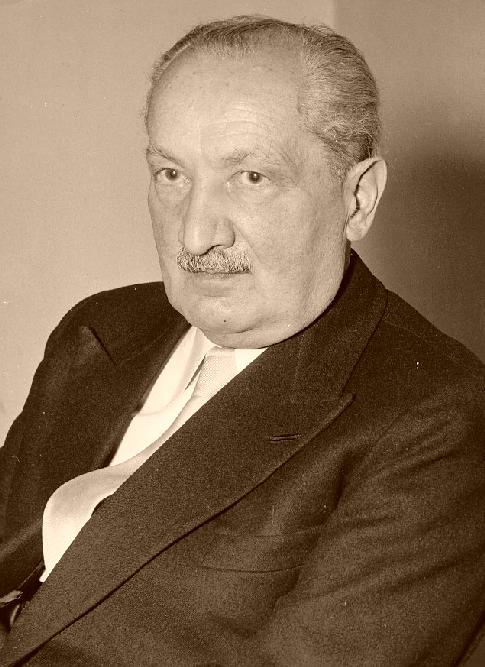 Can I really write a thesis on martyrdom and authentic selfhood and not mention either Heidegger or Kierkegaard?
Kerr's Wittgenstein and abortion
In Fergus Kerr's really interesting last chapter of his book Theology After Wittgenstein he makes this interesting application of Wittgenstein's thought, namely that if a 'metaphysical' concept of the self disappears the objection to abortion may actually be strengthened. This is because the human embryo already is human, and not just potentially one, or one in relation to a metaphysical soul:
The embryo already exists in the closest relationshop of physical dependence on an adult member of our species. Our being human has to be redecsribed as our being animals of a certain kind sharing from the beginning certain possibilities of interaction and response at the very physical level of vital functions. Paradoxically enough, the more animal we remember ourselves to be, the weightier the theological objections to abortion and embryo experimentation might become. p. 177
[As a side comment, I read last year Ray Monk's really moving biography of Wittgenstein. His story captured my attention... particularly when, as a character, he is compared to a man like Bertrand Russell, Wittgenstein stands out as an almost saintly and mystical figure. Well, up to a point! And the photos of Wittgenstein are truly haunting...]
O'Donovan on Equality

I am re-reading Ways of Judgment in preparation for a Symposium on the book next week. As is his common practice, Oliver O'Donovan will respond to three papers on his own work. This is one of the great things he does, actually: he has responded several times in print to reviews of Desire of the Nations which actually provides a terrific resource for his readers.
Anyways, he says some great things about equality:
The value of human life is equal, because equally infinite, not susceptible of any exchange value. p. 44
There is a hideous bureaucratic element in contemporary thinking about equality which calculates everything, even human life, in dollar terms. The Ford car company notoriously factored in the cost of compensation law suits for wrongful death in their manufacturing of the Pinto (nicknamed 'the barbecue that seats four'...). Equality is not an aspect of justice, but in fact an element of the doctrine of creation. Thinking about equality as justice leads us to this terrible calculation of exchange rates. We never stop counting things...
The hero of his book is Hugo Grotius, whose suggestion for 'attributive justice' O'Donovan is enthusiastic about. Attributive justice is not a theory of justice as such... it is a determination to play each case on its merits. It
elaborates differences. It strengthens relations of affinity and bonds of loyalty, it promites talkent and makes wise appointments to office, it gives opportunities to those who can use them.
Attributive justices recognises the fitness of acting in a certain way on certain occassions. If that sounds vague, that is because it cannot be prescribed ahead of time! Equality plays a different role, a remedial one (we might say).
Wednesday, June 27, 2007
Tuesday, June 26, 2007
Pictures of martyrs

The two questions I get asked most when I say what my thesis about are:
- was Bonhoeffer a martyr?
and
- was Jesus a martyr? 

I always have difficulty offering coherent answers to either. BUT: here are two works of art that confirm an answer in the affirmative to both.
One in a Shropshire church entitled "King of Martyrs"; the other, Bonhoeffer's statue on Westminster Abbey.
Theology After Wittgenstein - Fergus Kerr
 OK, this is one of those books that I should have read years ago, fair enough. Another one of 'em. It is enjoyably and unexpectedly quite chatty.
Kerr contends that modern theology is imbued with a thoroughgoing Cartesianism - an individualistic view of the self as a disembodied mind. This Cartesian turn, which is not as Augustinian as everyone says, was one of Wittgenstein's great targets: his great white whale you might say. Kerr is quick to show that, actually, Christian theology ought never have been so ready to swallow the Cartesian internalisation of the self.
He makes some fascinating applications of this shattering of Cartesianism:
There is nevertheless a central strain in modern Christian piety which puts all the emphasis on people's secrte thoughts and hidden sins. It gets to the point, in some traditions, that the worst sins of all become those that the individual performs entirely by himself. Wittgenstein recalls us... to the historical contingency of this belief. ... Why should our secret thoughts be more important than the thoughts that come out only too effectively in what we say and do? Are our most secret thoughts always so deep that only God could understand them? Are our most secret thoughts so much more interesting that the thoughts that we communicate? Are our hidden sins so much worse than the sins that we commit against, and with, other people, out in the open, for everybody to see? p. 173
Evangelicalism and Catholicism share this inward turn, it seems to me, though in different ways. Is it a fair cop?
Monday, June 25, 2007
Idolatry and Fertility

The worship of the fertility gods and goddesses expressed through idol worship draws attention to created objects themselves.
Could we say that is the attempt to make the divine immanent through made objects that is (partly) the problem with idolatry? It is not accidental surely that worship of the pagan deities (as portrayed by the OT) is worship of the fertility/agricultural deities is it?
Pseudo-Dionysius II
Reading on into The Mystical Theology, which is described as the key text for Pseudo-Dionysius's thought, I read -
The fact is that the more we take flight upward, the more our words are confined to the ideas we are capable of forming; so that now as we plunge into that darkness which is beyond intellect, we shall find ourselves not simply running short of words but actually speechless and unknowing. [MT 3]
Now, to me a crucial observation about all of this is simply that Pseudo-D seems quite happy to talk about it. Which is to say, he is quite far from speechless. He is quite confident to circumscribe the unknown by his knowledgeable words... this seems problematic to me. If this is so, then his humility is more than a little false.
It is interesting how much the theophany at Sinai is for Pseudo-D a paradigmatic encounter with the divine, in the dark cloud or shadow of the unknowing. And so it might have been if it were not for the incarnation of the Word. In Hebrews 12 we read:
18 You have not come to a mountain that can be touched and that is burning with fire; to darkness, gloom and storm; 19 to a trumpet blast or to such a voice speaking words that those who heard it begged that no further word be spoken to them, 20 because they could not bear what was commanded: "If even an animal touches the mountain, it must be stoned." 21 The sight was so terrifying that Moses said, "I am trembling with fear." 22 But you have come to Mount Zion, to the heavenly Jerusalem, the city of the living God. You have come to thousands upon thousands of angels in joyful assembly, 23 to the church of the firstborn, whose names are written in heaven. You have come to God, the judge of all men, to the spirits of righteous men made perfect, 24 to Jesus the mediator of a new covenant, and to the sprinkled blood that speaks a better word than the blood of Abel...
Sunday, June 24, 2007
USB ports - help anyone?
The four USB ports on my computer seem to have ceased functioning. What could be the problem, and what can I do about it?
[Advice from those who really know, please!]
[Advice from those who really know, please!]
Saturday, June 23, 2007
Pseudo-Dionysius, scriptural theologian
I am reading Pseudo-Dionysius - the darling of apophatic theology - for the first time. I was rather surprised to read him affirming quite strongly a very orthodox view of the scriptures as revelation of the divine (shows what my prejudices were I guess):
...we must not dare to resort to words or conceptions concerning that hidden divinity which transcends being, apart from what the sacred scriptures have divinely revealed. (The Divine Names 588A).
Which is to say: philosophy ought to be silent concerning God; but there is a given language for God in the Scriptures that we are bound to employ.
Perhaps he was a Barthian?
Friday, June 22, 2007
'May' vs 'Might'
In English usage, what is the difference between 'may' and 'might'? When might (or is it may) one use 'might' rather than 'may'?
For example is it this:
While Rahner and others might be right in urging a broadening of the concept of martyrdom...
For example is it this:
While Rahner and others might be right in urging a broadening of the concept of martyrdom...
or this:
While Rahner and others may be right in urging a broadening of the concept of martyrdom...
and why?
And who cares?
Transportation as punishment
On 13th May 1787 11 ships loaded to the gunwales with a human cargo set sail from Portsmouth for Botany Bay, in the land of New South Wales discovered by Captain James Cook some seventeen years previously. The 1420 souls aboard – somewhat more than that arrived at the other end – were to begin a colony in the form of a prison under the governorship of Captain Arthur Phillip – a colony built by forced labour at the barrel of the gun and at the crack of the cat o’ nine tails. Their journey must have been as terrifying in prospect as it was remarkable in completion. What could a poorly educated horse thief or pickpocket have imagined lay before him across the sea?
Transportation provides a fascinating case study in the history and methods of criminal punishment. Its need arose out of changing social conditions in England in the 18th century – the increasing urbanisation and population growth in Britain owing to the industrial revolution resulted in a terrific displacement of persons and, naturally, in an increase in crimes against property in particular. Whereas localised crimes of a relatively minor nature could have been dealt with by temporary and economic measures such as the stocks in rural districts, the rapid growth of the anonymous city meant that the means of administering punishments in this way was far less manageable. A village miscreant could have been quickly isolated, condemned and shamed by a community familiar to him or her. In the streets of London, it was easier to slip in and out of the crowd unnoticed.
Transportation was not a new punishment in 1787. But Cook’s discovery of an apparently empty and vast island at the other end of the globe made it a more attractive solution to the perennial problem of punishment. Transportation was, it was argued, more humane than the noose. The prisons of the day were notoriously overcrowded and disease-ridden; and in fact the government had resorted to putting its prisoners in prison-hulks moored on the Thames. More space was needed in the jails. What is more transportation was a means of excreting the waste matter from the body of society for its general health: the community stood only to benefit from the disposal of its more annoying and troublesome members. This was opportunity to lance the boil. It had its deterrent effect, too: New South Wales was to the eighteenth century mind surely further away than the moon is to ours – it was a terrifying prospect. And, it could also be argued, transportation was a great opportunity for the rehabilitation of the convict: if he survived the journey and the beatings and did not starve and served out his seven- or fourteen-year sentence he could find himself presented with all the opportunities of a new life in a new country.
Everard Digges La Touche

My predecessor as a lecturer at Moore College, Everard Digges La Touche, Church of Ireland clergyman and author of a brilliant work of Christology, saw WWI as a holy war against German liberal Protestantism. He joined up to fight against it...
The report of his service is here. I quote an excerpt from it:"At the outbreak of war in 1914, he tried first to join as a chaplain, then in the ranks of the 2nd. Battalion, Australian Inf. In November 1914, he was rejected because of his severe varicose veins, so he immediately went away and had an operation. This meant that he was too late to join the 2nd. Battalion, but as soon as he was well he joined the 13th and rose to Sergeant. You might wonder why this clergyman, who was not in A1 physical condition, and with the responsibility of his wife, Eve, and two young sons, was prepared to go off and fight, but one of his men summed him up, saying "he convinced us of the righteousness of our cause and likened this present struggle for liberty to a Holy Crusade, so when we finally sang "Onward Christian Soldiers", we meant it".
He was commissioned as a 2nd. Lt. in the 2nd. Battalion when an officer was needed to take reinforcements from Alexandria to Gallipoli, for the August attack. On the morning of the 6th, August 1915, he landed his men at Anzac Cove. As a Reinforcement Officer he could then have chosen to go back to Alexandria, but the official historian says that he begged leave to join the attack at Lone Pine. At 5.30, he went over the parapet with the first rush, only to fall, mortally wounded within a few seconds. He managed to roll down the slope of the spur and crawl back into the Australian lines, dying "among his own people" as Charles Bean the Australian war historian described it.”
They don't make 'em like they used to!Thursday, June 21, 2007
The Postmodern Absolute?
I thought this observation by everybody's favourite (non South American) Marxist Catholic Terry Eagleton was intriguing. He's talking about the critique of absolutes by postmodernists, and wondering if they have engaged in some sleight of hand:
It may also be that even postmodernism, with its aversion to absolute foundations, secretly smuggles such an absolute in to the argument. It is not, to be sure, God or Reason or History, but it behaves in just such a bottom-line sort of way. Like these other absolutes it is imossible to delve beneath it. For postmodernism, this is known as Culture... (The Meaning of Life, p. 31)
Culture, indeed. But what is meant by 'Culture' here?
Tuesday, June 19, 2007
Mark D Thompson on the future of church...
Some great stuff from me learned colleague:
We never want to return to the strict formality and artificiality which characterised at least some Christian gatherings in the past. Gathering with God’s people must mean taking each other seriously as well as the opportunities for service that arise when we are together. The critical difference between ‘church’ and our own private prayer and Bible reading is that we are together, ‘in the fellowship of his people’. And that fellowship must have a sense of reality about it. Precisely for this reason the work of ministry has ‘building each other up’ as a proper concern. But in our rush to address the imbalances of the past and to work together for the good of the body, it is at least theoretically possible to ignore that this happens as we meet with, or better, are met by God in his word. Church is not just a study group or a training centre. Church is a gathering around the powerful, confronting and encouraging address of the living God. Recapturing this sense of the significance of our gatherings might actually prove to be an important part of getting on with the mission.
'nuff said.
Professionalism vs Amateurism in Church: a Third Way?
In church on Sunday the PA was not turned on as the pastor stood up to welcome us AGAIN. It happens every week: and we kind of laugh it off. After all, church is a voluntary society, and we couldn't possibily criticise; people are not professionals, and are offering their time for no payment, and presumably are doing their best etc. We bumble through. (It's a very English way to be!)
You may be able to tell that I am increasingly frustrated with this. And my immediate response is to say 'we need a more professional (American) attitude!'. But then I caught myself: is this word what we want? Do we want 'professionalism?' The production of our church services would be cleaner and tighter and less distracting...after all.
But I don't think 'professional' is right either, and I think we need to expunge all talk of professionalism from our midst! It sends the wrong message. What we need is: nuture of our gifts, and a determination to give the people of God nothing but the best you can possibily do for the sheer love of them and God. What we need is a taking seriously of the need to nuture and perfect and practice our gifts as a way of honouring them as God-given for the purpose of up-building his church.
Monday, June 18, 2007
O'Donovan on punishment II
In his chapter on punishment, O'Donovan carefully distinguishes between divine and human punishment so as to show human punishment its limited scope. But in doing so, he shows that punishing is something that God does:
Ontologically native to God, punishment takes some excusing in terms of extrinsic goods, when practices among consanguinous humankind. Ways of Judgment p.114
It is a side-comment only, but a huge statement in the context of contemporary theology: punishment - ie, 'a judgment enacted on the person, property, or liberty of the condemned party’ is something not foreign but rather proper to God, requiring no other justification other than that it is an exercise of his supreme dominion.
Saturday, June 16, 2007
Ruth Gledhill on Wycliffe
Well blow me down, Ruth Gledhill has written just about the only sensible article on the Wycliffe affair. Now, lets be clear - The Times has had a job to win me over after a frankly appalling article on the Sydney diocese a few years back (was it 20+ factual errors? I forget: it was basically copied it out of a hatchet job in Theology by a chap called Humphrey Southern). But this piece is a professional piece of journalism that doesn't make opinion into fact (Stephen Bates' stock-in-trade). Amazing!
IMPORTANT CORRECTION: the offending article was NOT written by Ruth Gledhill as I originally claimed but by her colleague Mary Ann Sieghart. It is a true shocker (a 'Barry Crocker' as we call it back home). See for yourself:
http://www.timesonline.co.uk/tol/comment/columnists/mary_ann_sieghart/article830129.ece
Subscribe to:
Posts (Atom)